The Road Trip Packing List for Solo Travelers
Everything you actually need for a solo road trip, and the things you'll regret carrying across three states.
Quick facts
- Best for
- Solo road trips, 3 days to 3 weeks
- Car kit
- 10 items
- Safety kit
- 5 items
- Clothing rule
- Pack for the real itinerary
- Book ahead
- First and last nights
Solo road trips are one of the most liberating ways to travel: your route, your stops, your pace. But packing for one as someone travelling alone takes a bit more intention than a group trip does. This list covers what you actually need, including a section of solo-specific items worth the space.
Car essentials
These live in the vehicle at all times. Not in your bag, not in a suitcase.
- Jumper cables or a portable jump starter: the battery-pack type means you don't need to flag down another car. Worth every dollar.
- Tire inflator: small 12V plug-in models are cheap and will save you on a slow leak.
- Roadside emergency kit: reflective triangles, basic tools, work gloves.
- Offline maps downloaded in advance: cell service disappears in exactly the places you most need it.
- Phone mount: non-negotiable for navigating without looking down.
- Dash cam: useful documentation if anything happens.
- Power bank: for charging away from an outlet.
- Water bottle and a cooler: keeps you from making unnecessary stops in places you don't know.
- Blanket and pillow: for camping, long overnight drives, or a safe nap at a rest stop.
- First aid kit: bandages, antiseptic, pain relief, your own medications.
Solo safety items
These aren't about paranoia. They're about making decisions in advance so you don't have to make them under pressure.
- Personal alarm: the keychain type that emits 120+ dB. Loud enough to disorient someone and draw attention.
- Door wedge alarm: stops a hotel or motel door opening from outside. A useful extra layer in unfamiliar accommodation.
- Pepper spray: legal in most US states, but check the laws where you're driving. Keep it reachable, not buried in a bag.
- A charged phone and a backup charger: always. Share your location with someone you trust on unfamiliar routes.
- A second payment method: a backup card kept separately from your wallet. Not for paranoia, but for when one gets blocked or compromised mid-trip.
Clothing: versatility over volume
The mistake most road trippers make is packing for the theoretical trip rather than the actual one.
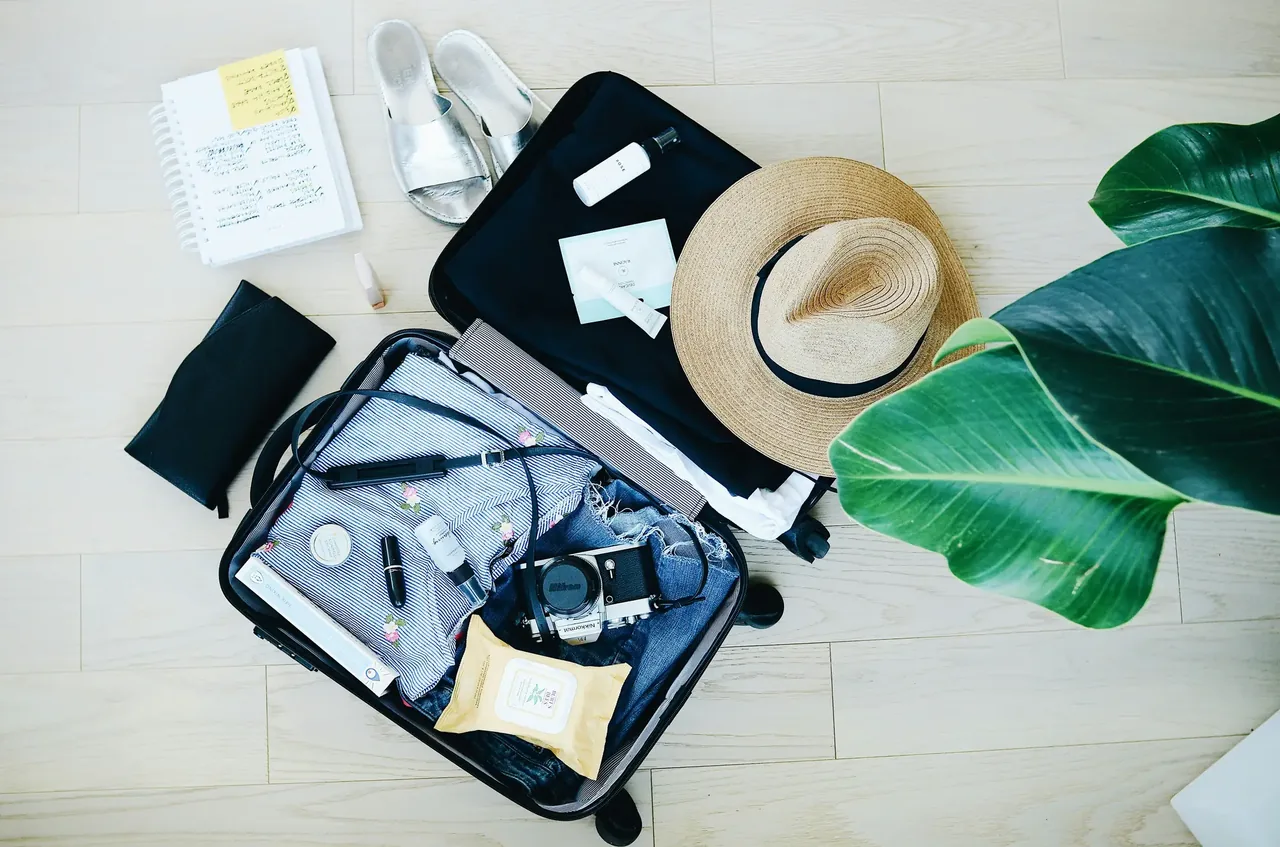
- 3–4 tops that mix and match. Neutral colours make this easier
- 2 pairs of pants or shorts, one casual and one that works for a nicer dinner
- 1 dress or versatile outfit that covers several situations
- Layers for the car. Air conditioning is aggressive regardless of the outside temperature
- Comfortable walking shoes, plus one pair you'd wear to dinner
- A rain jacket that packs small
- Swimwear if your route calls for it
Organising the overnight bag
If you're staying in several places, pack so you can grab one night's worth without unpacking everything. Keep toiletries, the next day's outfit and your charger accessible at the top or in a separate pouch.
- Toiletries in a clear zip bag, TSA-style, even if you're not flying
- Dry shampoo, more useful on a road trip than almost anything else
- Microfiber towel: for beach stops, camping, or questionable motel towels
- Earplugs. Motel walls are thin
- Eye mask for sleeping in the car on long travel days
What to leave behind
The things people regret bringing: full-size toiletries, a hair dryer (motels have them), more than one physical book, anything valuable you'd hate to lose to a smashed car window, and anything white, which will not stay white.
Before you leave
The best preparation happens before you turn the key. Get the car serviced: oil, tires, brakes. Download offline maps for the whole route. Book at least the first and last nights. Give a trusted contact your rough itinerary. Check you have roadside assistance, either through AAA or your insurance.

None of this is glamorous. All of it is what makes the trip go smoothly when something unexpected happens.
Two Things Worth Checking Before You Book the Route
Roadside assistance coverage isn't automatic, and it isn't uniform. It comes through a motoring club membership, a credit card benefit, your insurer, or the rental company, and each covers different things. Towing distance limits are the detail that matters: some plans tow you a few miles, which is useless on a route where the nearest garage is fifty. Check the towing radius rather than just confirming you "have cover," and save the number offline. It's the one phone call you'll be making with no signal and no patience.
Rental cars carry restrictions that don't appear until you read the agreement. Common ones: unpaved and gravel roads excluded from cover, other drivers not permitted, and geographic limits, crossing a state or national border can void the policy entirely. On several destinations covered on this site the best places to drive are exactly the roads a standard agreement excludes, so read the terms before you plan the itinerary around them rather than after.
Where This List Actually Gets Used
Not every road trip needs all of this, but some genuinely do. The Road to Hana on Maui is 620 curves and 59 bridges with signal dropping out for stretches, and driving it alone means no second pair of eyes. The Overseas Highway to Key West is 113 miles and 42 bridges with no alternative route, so a breakdown or a closure means waiting rather than rerouting. Rincón and Vieques both need a vehicle to reach the beaches, on an island where grid power and phone signal are both less reliable than you'd expect.
Those are the trips where a torch, a power bank and a full tank stop being over-preparation.
Where to go next
Common questions
Is a personal alarm worth carrying on a solo road trip?
Yes. A keychain alarm emitting 120+ dB is small, cheap, legal everywhere, and needs no training to use. It buys attention and disorientation, which is usually what you actually need.
What do people most often regret packing?
Full-size toiletries, a hair dryer, several books, anything white, and anything valuable enough that losing it to a broken car window would ruin the trip.
How much clothing should I bring on a road trip?
Three or four mix-and-match tops, two pairs of pants or shorts, one versatile dress or outfit, walking shoes plus one dinner pair, and a packable rain jacket. Layers matter more than variety because car air conditioning runs cold.
Can I drive a rental car anywhere I want?
Often not. Standard agreements frequently exclude unpaved and gravel roads, restrict who else may drive, and impose geographic limits that can void cover if you cross a state or national border. Read the terms before you plan a route around a road the policy does not allow.