Solo Travel in Aruba: Eagle Beach, Safety and What It Costs
Eagle Beach ranks among the world's best, and Aruba holds the State Department's lowest advisory level. The trade-off is cost.
Quick facts
- Region
- Dutch Caribbean (ABC Islands)
- Best months
- Year-round, trade winds cool it
- Typical temperature
- ~30°C / 86°F
- Airport
- Queen Beatrix (AUA)
- Budget
- Mid to high-range
- Solo Safety
- Excellent, one of the safest
- Best Beach
- Eagle Beach (world top 10)
- Unique Feature
- Constant trade winds
My trip
- Visited
- May 2018
- Length
- 7 nights
- Stayed
- Brickell Bay Beach Club
- Got around by
- Rental car (walk-in, no reservation)
- Travel style
- Mid to high-range
Aruba is small enough to take in whole, so I did. I walked into a rental office without a reservation, asked for a car, and drove from the northern tip down to Baby Beach, eating well the entire way. Home base was Brickell Bay Beach Club.
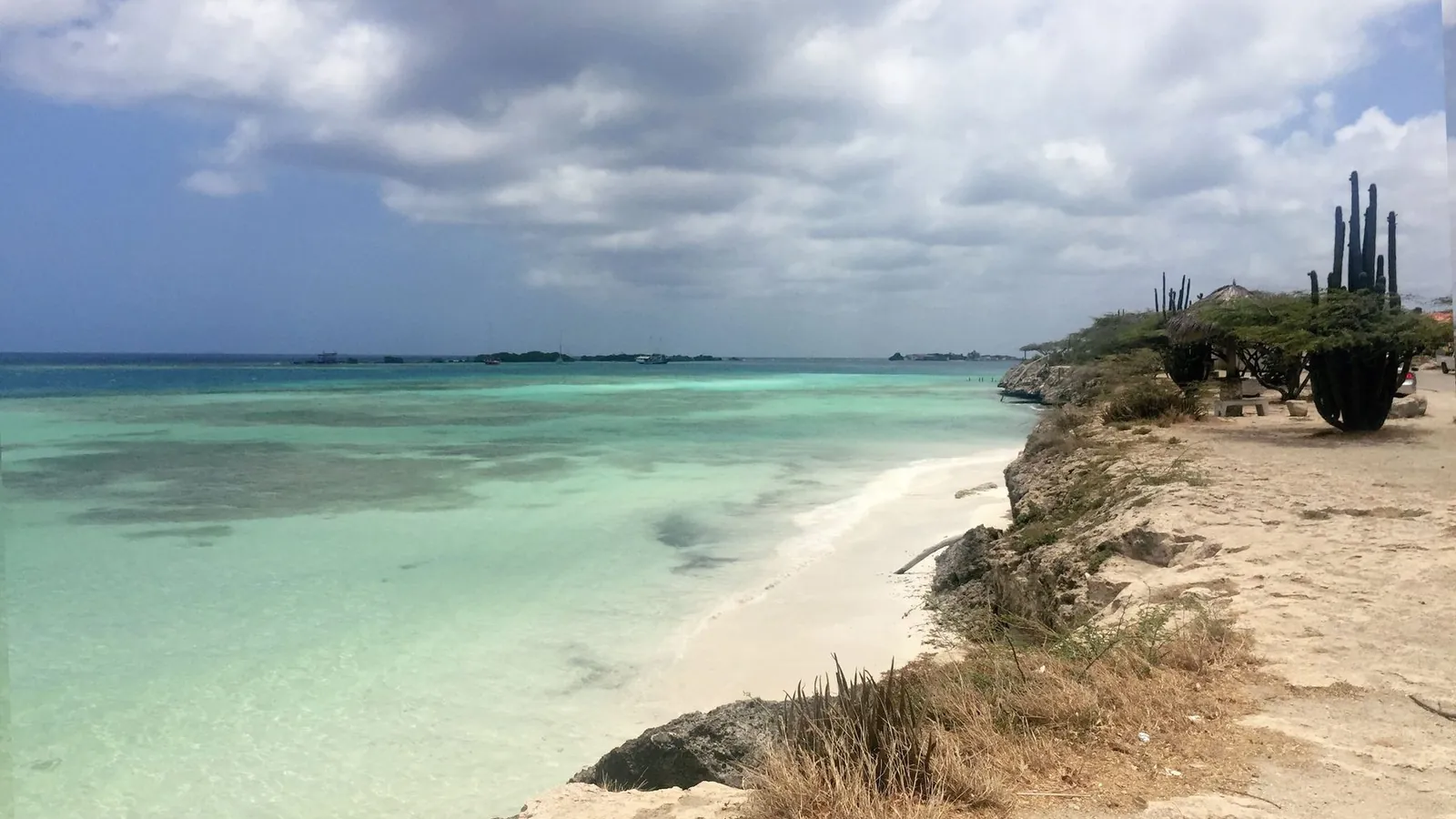
Aruba is one of the most consistent weather destinations in the Caribbean: outside the hurricane belt, almost no rain, constant trade winds, and sunshine about 330 days a year. Eagle Beach is the island's standout beach: wide, white, uncrowded compared to the resort-lined Palm Beach strip, and consistently ranked among the best beaches in the world. For solo travelers, Aruba is genuinely one of the easiest and most welcoming Caribbean destinations there is.
Short answer: Aruba is one of the easiest Caribbean islands to travel alone. It sits at the calm end of the US State Department's advisory scale, the Arubus network connects Oranjestad, Eagle Beach and Palm Beach on a real schedule so you don't need a car, tap water is safe to drink, and English is spoken everywhere in tourism. Base yourself at Eagle Beach rather than Palm Beach. The trade-off is cost, and the real hazard is the surf on the north and east coasts, not crime.
Is Aruba Safe for Solo Travelers?
The US State Department rates Aruba at Level 1, Exercise normal precautions (as of August 2024), and the island has long been one of the calmest in the Caribbean.
That rating plus the island's structure is why Aruba is the standard recommendation for a first solo international trip. It's 32km end to end and hard to get genuinely lost on. English is spoken universally in tourism. The Arubus network actually connects Oranjestad, Eagle Beach and Palm Beach on a schedule, which is unusual in the Caribbean and means you don't need a car or a taxi budget. Tap water is desalinated and safe to drink, also unusual regionally, and it removes a small daily friction that adds up over a week alone.
The realistic risk is beach theft: bags left on the sand at Eagle Beach while you swim. No advisory level changes that.
The hazard worth naming is the wind, not crime. Aruba's constant trade winds are what make it comfortable in the heat and also what makes the water deceptive, the surf on the north and east coasts is genuinely dangerous, and those beaches are unpatrolled. Eagle Beach and Palm Beach on the leeward west side are calm. The wild side is for looking at.
I walked the beach alone, ate at restaurants alone, and drove the island alone in May without a single uncomfortable moment.
Eagle Beach vs. Palm Beach: Where to Go
These two sit about 2km apart on the same leeward coast and they are not interchangeable. Picking the wrong one as your base is the most common way an Aruba trip disappoints.
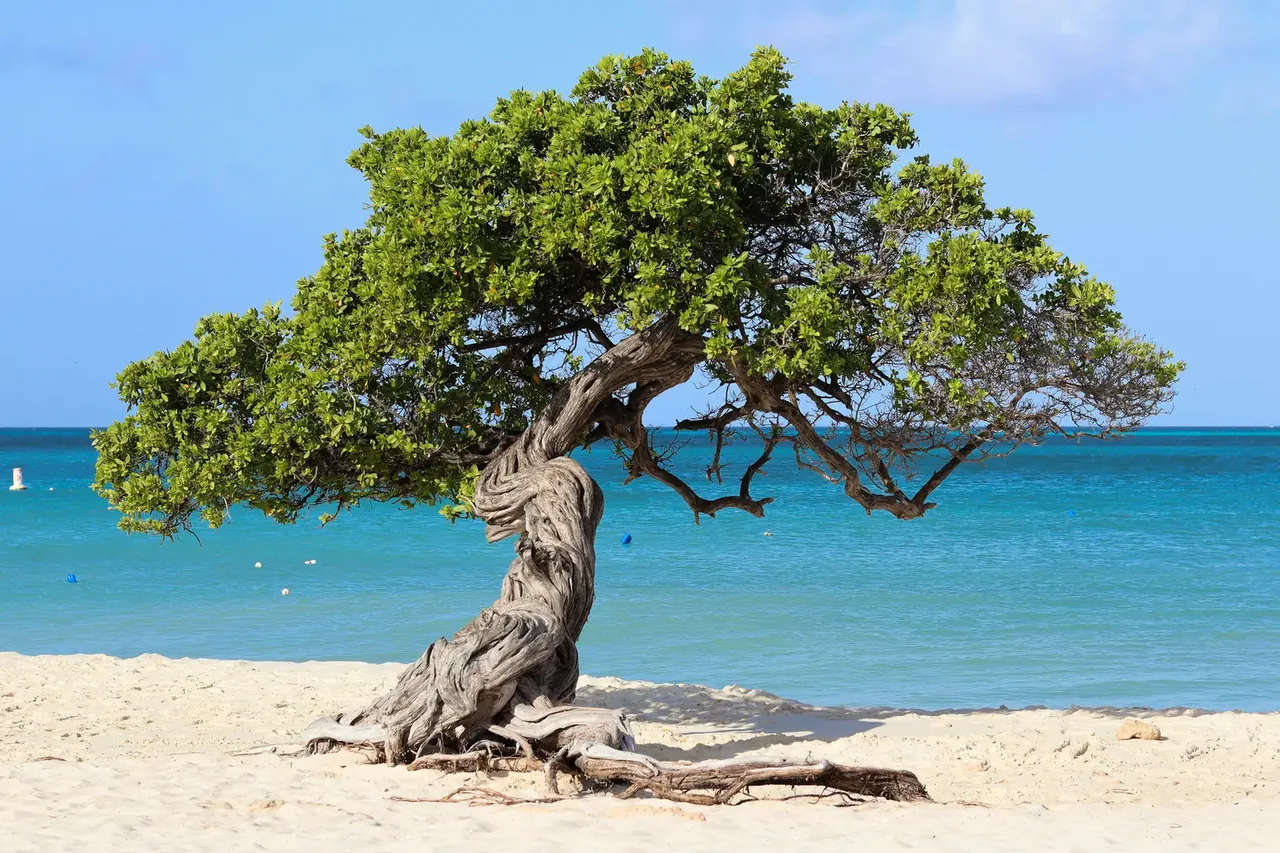
Eagle Beach is the better beach and it isn't close. Wider sand, calmer water, far fewer people, and no jet ski vendors cutting through the swim area. It's backed by low-rise hotels and timeshare properties rather than a resort wall, which is why the sand feels open rather than owned. The two wind-bent Fofoti trees are the island's most photographed object, and worth knowing they sit at the southern end, so walk down rather than hunting for them at the main access point.
Palm Beach is where the infrastructure is: the high-rise hotel strip, beach bars, restaurants, water sports rentals, and the island's evening scene. The water is busier and the sand is more crowded.
How to choose if you're alone. This is the real decision, and it's about evenings rather than beaches.
Eagle Beach is quieter in a way that's restorative during the day and can be flat at night. You'll likely be taking a bus or taxi to find dinner and company. Palm Beach puts restaurants, bars and other people within walking distance of your room, which matters more than most solo travellers expect on night three.
The compromise most people miss: stay at Palm Beach and commute to Eagle Beach. The Arubus route runs the strip constantly and costs almost nothing, the walk between them along the sand is about 25 minutes, and you get the better beach by day and the easier evening by night. Doing it the other way round means arranging transport every evening.
Timing. Both beaches face west, which means both get the sunset, Eagle with far fewer people in the frame. Mornings are calmest at both; the trade winds build through the afternoon, which is glorious for shade and unhelpful for an umbrella.
A practical note on that wind: lie on a towel and you'll end the day with sand in your mouth. A beach chair keeps the sand down at your toes, where it belongs.
Wind Sports: Aruba's Other Identity
Aruba's consistent trade winds make it one of the world's top kitesurfing and windsurfing destinations. Boca Grandi on the east coast is where the kite schools operate. The water is choppy and not suited for casual swimming but excellent for wind sports. If you've never tried kitesurfing, Aruba has some of the best instructors in the Caribbean. Lessons are available to solo travelers and the beach has a naturally social atmosphere.
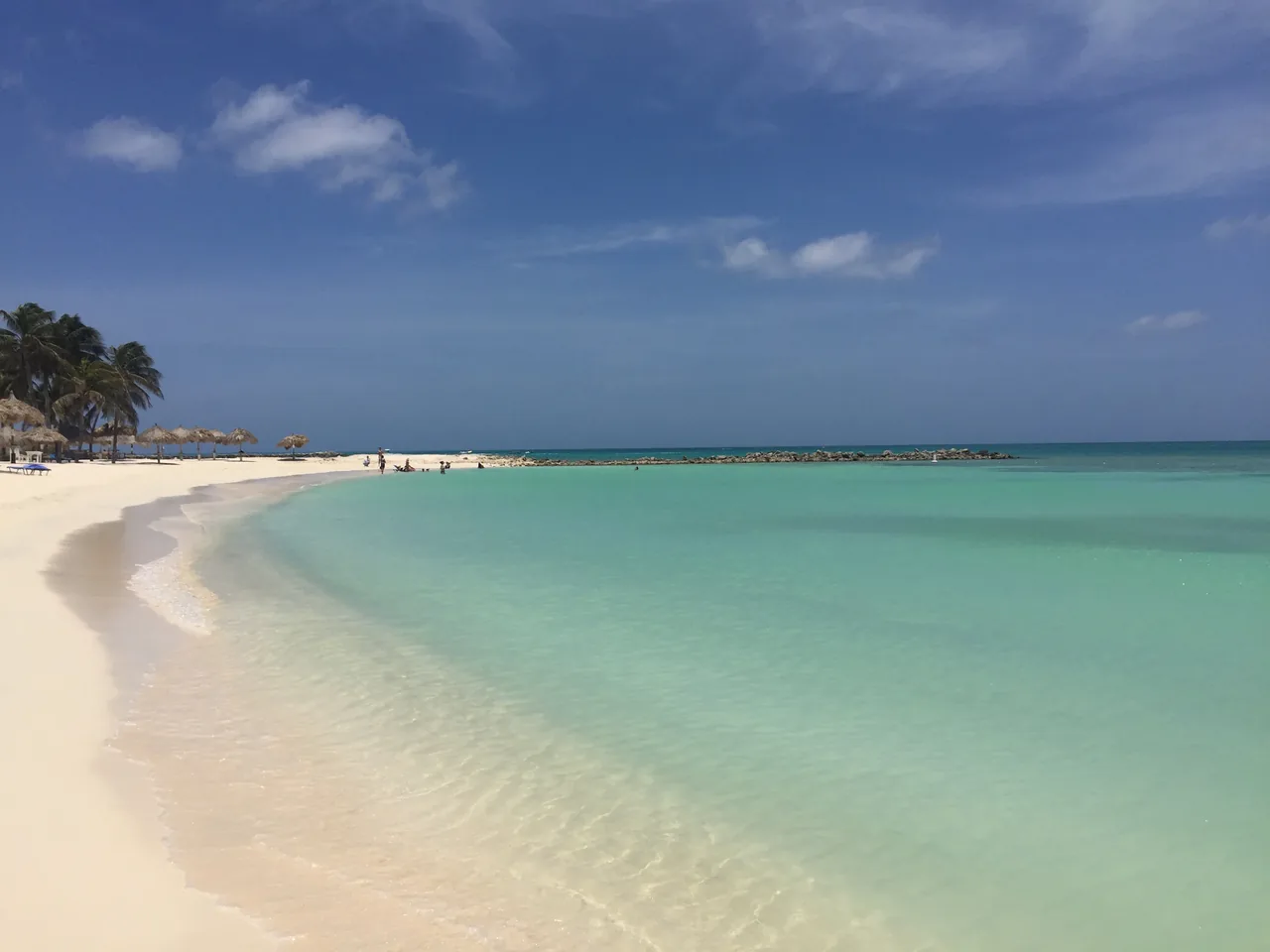
Baby Beach and Snorkeling
Baby Beach at the island's south end is a sheltered, shallow lagoon: calm as a swimming pool, excellent for snorkeling, and almost devoid of current. The reef just outside the lagoon has good coral and fish populations. It's a 30-minute drive from Eagle Beach and completely worth the rental car.
Baby Beach is a must-see, and I drove there from the other end of the island, making stops along the way. Arashi Beach, at the northwestern tip, was beautiful too.
Eating My Way Around Aruba
In a week on the island I didn't have a single meal that wasn't excellent. Mornings started at Eduardo's Beach Shack, known for its plant-based energy and protein balls; one of those with a coffee will carry you to lunch. And the coconut shrimp at one of the restaurants on the beach piers was the best I've had anywhere.
Practical Info for Your Trip
- Best time to visit: Year-round. Aruba's weather is remarkably consistent. May is post-peak season with lower rates and still-excellent conditions.
- Getting there: Queen Beatrix International Airport (AUA) has direct flights from many US cities (Miami, New York, Atlanta, Houston).
- Getting around: Rental car is recommended for exploring beyond the beach strip. Buses connect Eagle Beach and Palm Beach to Oranjestad (the capital).
- Currency: Aruban Florin (AWG), but USD accepted virtually everywhere.
- Solo safety rating: Excellent, one of the most comfortable solo travel destinations in the Caribbean.
Where to go next
- Curaçao, more culture and a walkable capital.
- Bonaire, if the diving is what you actually came for.
- the island comparison, for how Aruba stacks up.
What the official advice says
Aruba, Level 1: Exercise normal precautions
Source: U.S. Department of State, issued August 2024. Checked 16 August 2026. Advisory levels change, so check the source before you book.
Common questions
Is Aruba safe for solo travelers?
Aruba has long held the lowest US advisory level, which most Caribbean islands do not. Combined with universal English, a working bus network and an island only 32km long, it is the usual recommendation for a first solo trip abroad. Beach theft is the realistic risk.
Do I need to rent a car in Aruba?
Not strictly. The Arubus network runs to a real schedule between Oranjestad, Eagle Beach and Palm Beach, which covers the main beach strip. I rented one anyway, walk-in with no reservation, and it made Baby Beach in the south and Arashi in the north easy day trips.
Can you drink the tap water in Aruba?
Yes. Aruba desalinates its own water and it is safe straight from the tap, which is not true across most of the region. Small thing, but it removes a daily errand when you are travelling alone.
Which beaches in Aruba are safe to swim at?
The leeward west coast, Eagle Beach and Palm Beach, is calm and protected. The north and east coasts face the open Atlantic, have genuinely dangerous surf and no lifeguards. Those beaches are worth the drive to look at and not worth swimming from.