Solo Travel in Antigua and Barbuda: Beaches, Safety and Costs
365 beaches, a working sailing harbour, and enough going on that a solo traveler never has to invent things to do.
Quick facts
- Region
- Eastern Caribbean (Leeward Islands)
- Best months
- Dec–April
- Typical temperature
- ~29°C / 84°F
- Airport
- V.C. Bird International (ANU)
- Budget
- Mid to high-range
- Solo Safety
- Excellent
- Iconic
- Sailing Week (April/May)
- Best Beach
- Half Moon Bay
My trip
- Visited
- July 2019
- Length
- A week to ten days
- Stayed
- Jolly Beach Resort & Spa, Jolly Harbour (all-inclusive, a little dated but safe)
- Got around by
- Taxi from ANU; mostly on foot along the beach and up to Jolly Harbour after that
- Travel style
- Mid to high-range
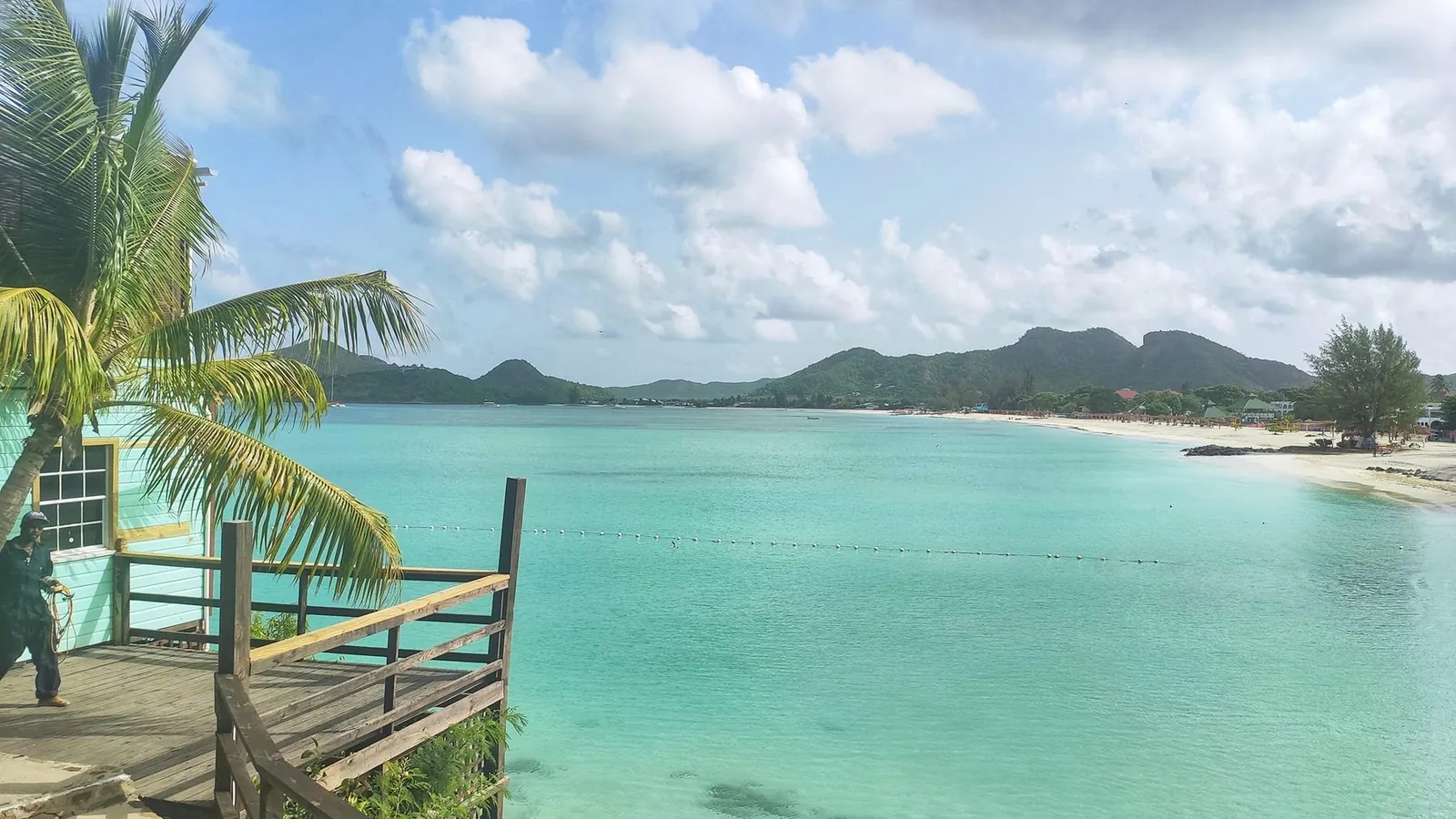
The bit that made the trip: The view over the marina and bay from the lookout at Hill on Jolly Harbour
Antigua, for me, was a rhythm more than an itinerary: long walks down the length of the beach, and the climb up to the lookout at Hill on Jolly Harbour, which has one of the better views on this side of the island over the marina and the coast beyond it. Home base was Jolly Beach Resort & Spa on the west coast, an all-inclusive that's a little worn around the edges in places but felt safe the whole time I was there, with a store just up the road for sunscreen, snacks or anything else you forgot to pack.
Antigua has a claim to 365 beaches, one for every day of the year, and while the count is generous, the reality is that the island has more beautiful beaches per square mile than almost anywhere in the Caribbean. Add one of the finest natural harbors in the hemisphere, a rich sailing culture, and a colonial history told through some genuinely impressive sites, and you have a destination that rewards the solo traveler who wants more than just a lounger on the beach.
Short answer: Antigua works well alone: 365 beaches, all of them legally public, a walkable historic harbour at Nelson's Dockyard, and Shirley Heights on a Sunday evening, which is the single easiest place on the island to end up talking to people. You'll want a car or a budget for taxis, since public transport doesn't reach most beaches.
Is Antigua Safe for Solo Travelers?
The US State Department rates Antigua and Barbuda at Level 1, Exercise normal precautions (as of May 2026), and the island has long been one of the calmer places in the Caribbean to travel on your own.
The advisory does flag one thing that isn't crime: Antigua and Barbuda regularly experiences hurricanes. Season runs June to November and peaks August to October. For a solo traveller that's less about danger than about being on a small island alone when flights stop, build slack into your dates in those months and take trip-interruption cover seriously.
Day to day, the practical picture is straightforward. English is the working language, English Harbour, Dickenson Bay and the St John's waterfront are active and tourist-facing, and beach theft is the realistic risk, bags left on the sand while you swim. Standard awareness applies once you're away from the main zones after dark.
The gap in Antigua isn't safety, it's transport, and it shapes the whole trip more than anything else here.
Buses are cheap but stop early and don't cover the island. Public transport doesn't reach several of the best beaches at all, including Half Moon Bay. Taxis are not metered and are expensive once you're covering distance, which adds up fast when you're paying the whole fare yourself rather than splitting it.
The practical consequence is that evenings need planning in advance rather than deciding at dinner. If you want to be at Shirley Heights on a Sunday evening, or eating in English Harbour after dark, work out the return leg before you go out and agree the fare up front. This is the single thing most likely to catch out a first-time solo visitor to Antigua.
Two ways to solve it. Base yourself in English Harbour, Dickenson Bay or Jolly Harbour on the west coast, where enough is within walking distance that you rarely need a car after dark. Or rent one. Driving is on the left, and it turns the east coast beaches from a logistical problem into an afternoon.
English Harbour and Nelson's Dockyard
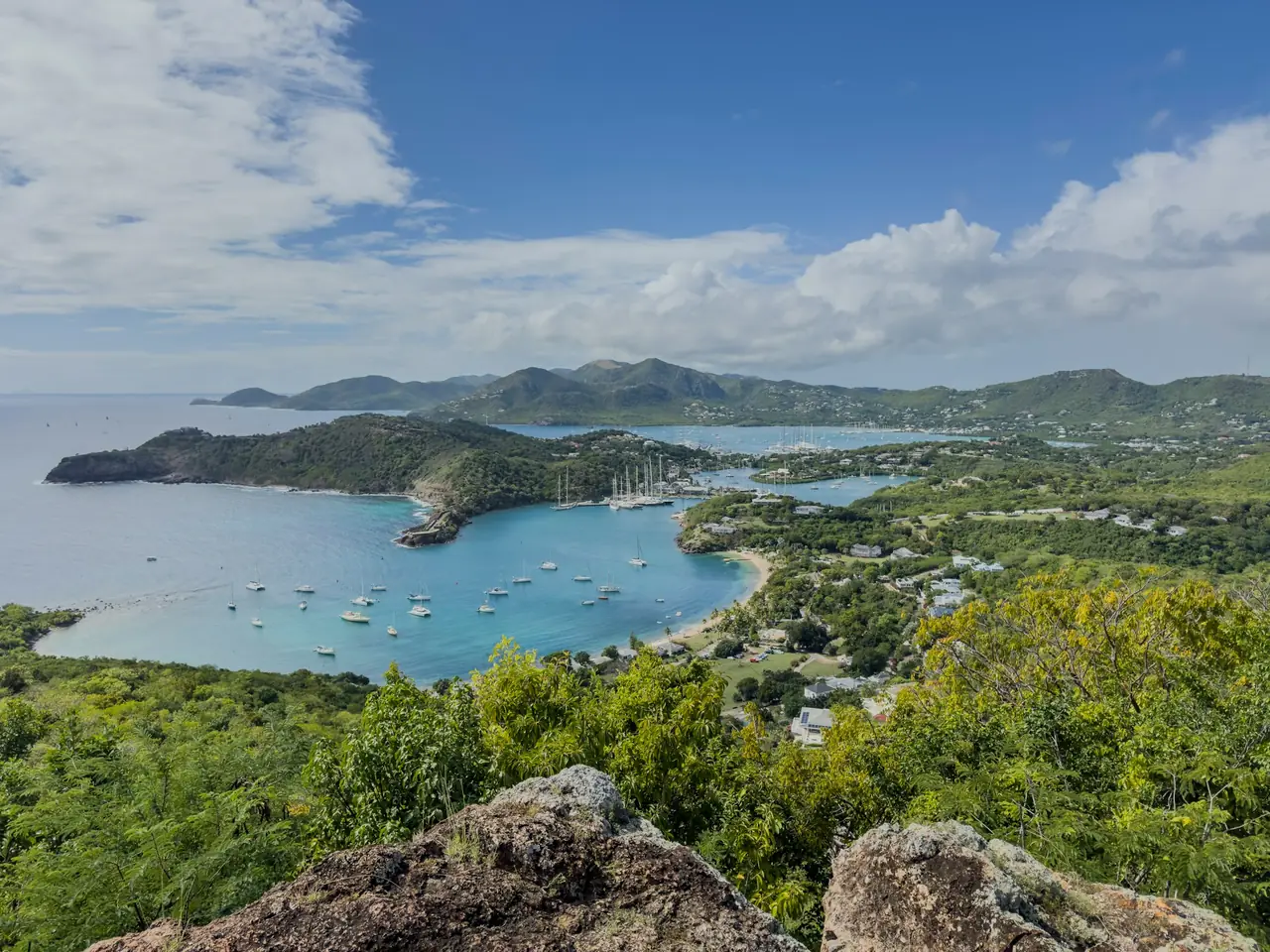
English Harbour in the island's south is one of the Caribbean's most atmospheric destinations: a natural deep-water harbor surrounded by hills, with Nelson's Dockyard at its center: a restored 18th-century British naval dockyard (the only remaining operational Georgian dockyard in the world) now lined with restaurants, boutique hotels, and sailing vessels. The dockyard is excellent to explore alone; the surrounding hills offer good hiking with harbor views.
Shirley Heights: Sunday Party With a View
Shirley Heights Lookout above English Harbour hosts a legendary Sunday evening gathering: steel pan bands, BBQ, rum punches, and a view across the harbor as the sun goes down. It's one of the most social, welcoming events in the Caribbean for solo travelers. Everyone mingles, the music is excellent, and the view is extraordinary. Don't miss it if your timing allows.
The Best Beaches
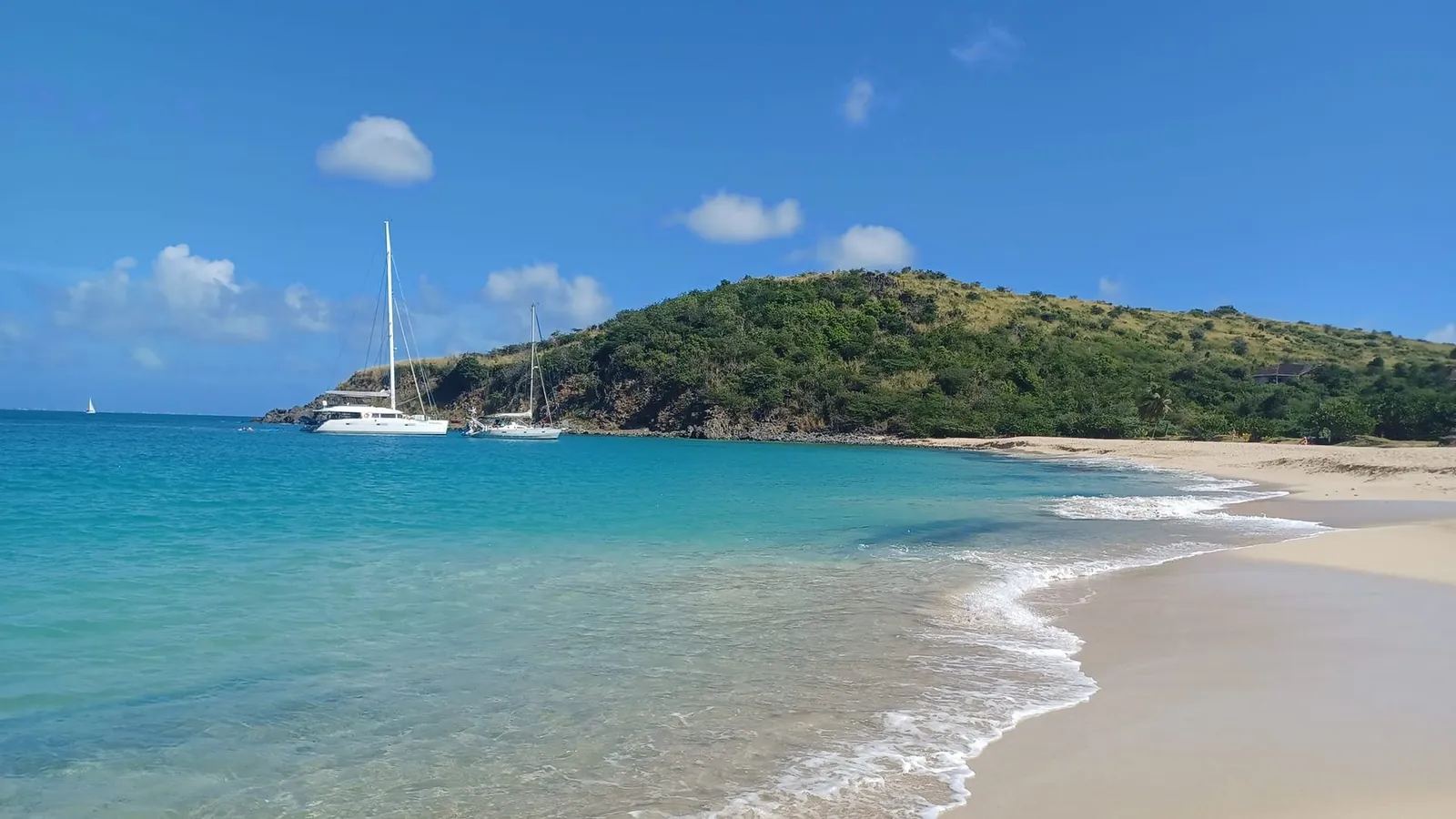
Half Moon Bay is the one worth rearranging a day around, and it needs more planning than the other two.
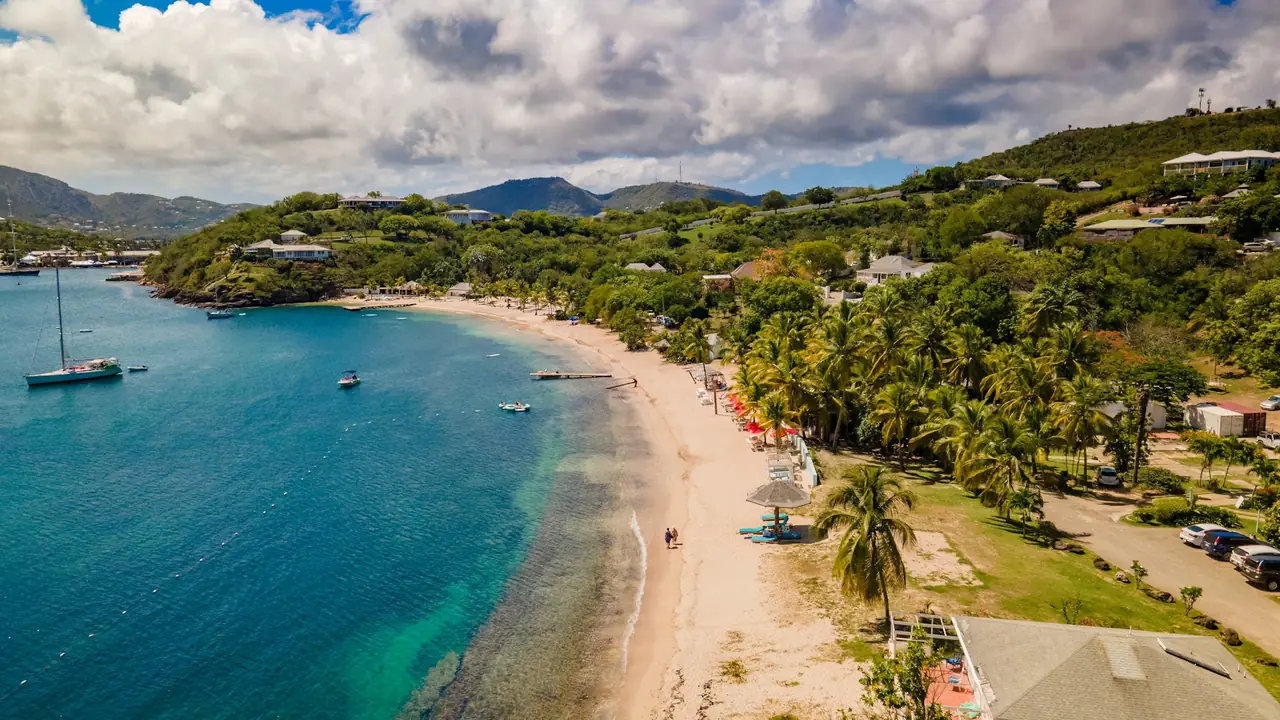
It sits on the southeastern coast inside a national park, roughly 30 minutes by car from the airport and 40 from St John's. Public transport doesn't usefully reach it, so this is a rental car or a taxi fare you should agree before setting off. Parking is free and limited. There is no entrance fee.
What you get is a long crescent of pale sand backed by protected, undeveloped land, no resort, no strip, a handful of beach bars near the car park and essentially nothing along the rest of it. That emptiness is the appeal and also the thing to plan for: bring water, bring shade, bring your own snorkel gear if you want to use the offshore reef, because nobody is renting it to you at the far end.
The water is not uniform, and this matters if you're swimming alone. The northern and western end of the bay is the calm, shallow, snorkel-friendly part. The centre and eastern side catch more swell and run stronger currents, enough that surfers and windsurfers use it. There are no lifeguards anywhere on the beach.
For a solo traveller that combination (remote, unpatrolled, and quiet enough that your bag sits unattended while you're in the water) is worth taking seriously in a way it wouldn't be at Dickenson Bay. Swim the north end, keep your things where you can see them, and tell someone where you're going before you drive out. Download the map offline; coverage on that side of the island is patchy.
Go on a weekday if you can. Weekends draw local crowds, and the bay is at its best when there's almost nobody on it. It empties out entirely at dusk. There's no evening scene here at all, which is worth knowing before you plan dinner around it.
Dickenson Bay in the north is the main tourist beach: longer, with beach bars, water sports and enough people around that solo travellers blend in completely. It's the easy option and there's no shame in it: facilities, food, and other humans in the water with you.
Pigeon Point in the south, near English Harbour, is small, pretty and good for snorkelling, and it's the one to pick if you're based around the dockyard and don't want to drive.
Jolly Beach, further up the west coast, is a good pick if you want a resort base you can walk everywhere from. The sand runs long enough that you can spend an afternoon just walking it, the swimming is calm, and there's a store just outside the resort gates for anything you need last minute: sunscreen, water, snacks. Some of the resorts along this stretch show their age, mine included, but it felt safe the whole time. Worth the short climb up to Hill on Jolly Harbour at least once, for the view back over the marina and the bay.
July in Antigua: What to Expect
July is early Carnival season. Antigua's annual Carnival runs late July through early August and is one of the Caribbean's most vibrant, with parades, steel pan competitions, and street parties. It's technically early hurricane season but direct hits are rare. The island is lively, prices are moderate (between shoulder and peak season), and the energy of Carnival makes solo travel particularly easy. Everyone is out.
Practical Info for Your Trip
- Getting there: V.C. Bird International Airport (ANU) has direct flights from the US (New York, Miami) and UK.
- Getting around: Rental cars give the most freedom. Driving is on the left. Taxis are available but expensive for multiple destinations. Local buses (jitneys) are cheap but run infrequent schedules.
- Currency: Eastern Caribbean Dollar (XCD). USD accepted widely. Cards at most hotels and restaurants.
- Solo safety rating: Very good.
Where to go next
- Barbados: livelier, better public transport, the obvious next island.
- Sint Maarten, another easy Eastern Caribbean flight, with a split-island quirk.
- the full island comparison, if you want to weigh them properly.
What the official advice says
Antigua and Barbuda, Level 1: Exercise normal precautions
Source: U.S. Department of State, issued May 2026. Checked 16 August 2026. Advisory levels change, so check the source before you book.
Common questions
Is Antigua safe for solo travelers?
Antigua and Barbuda has long sat at the calm end of the US State Department's advisory scale; check the current level before you go. Beach theft is the realistic risk rather than anything violent. The other thing to plan around is hurricane season, which peaks August to October.
How do you get to Antigua?
V.C. Bird International (ANU) is the main hub for the Eastern Caribbean, with direct flights from New York, Miami, London and Toronto. That connectivity is one of the reasons Antigua works as a first solo island. You can usually get there and back without a connection.
What currency is used in Antigua?
The East Caribbean dollar, pegged at roughly 2.7 to the US dollar. Dollars are accepted almost everywhere, but change usually comes back in EC, and the rate you get paying in dollars is rarely as good as the peg.
Do I need to rent a car in Antigua?
It depends on your base, and this is the real constraint on a solo trip here. Buses are cheap but stop early and don't reach the whole island, so an evening out anywhere other than walking distance means a taxi. Stay in English Harbour or Dickenson Bay and you can manage without; anywhere else and the taxi fares add up fast.