Barbados Solo Travel: Is It Safe, and Where to Go
One of the Caribbean's most polished islands for solo travel: reliable buses, good food, beaches on both coasts, and a long record at the calm end of the US advisory scale.
Quick facts
- Region
- Eastern Caribbean
- Best months
- Dec–April
- Typical temperature
- ~29°C / 84°F
- Airport
- Grantley Adams (BGI)
- Budget
- Mid to high-range
- Solo Safety
- Excellent
- Don't Miss
- Mount Gay Rum distillery tour
- Best Beach
- Crane Beach or Mullins Bay
My trip
- Visited
- January 2023
- Length
- A week to ten days
- Stayed
- Dover Beach Hotel, south coast
- Got around by
- Rental car
- Travel style
- Mid to high-range
Barbados is an island for wandering by car: south coast to north in about an hour, with surf breaks, a rum distillery and a fish fry along the way. I drove it from one end to the other, coming home each night to the Dover Beach Hotel on the south coast.
Barbados is the most developed tourism destination in the Eastern Caribbean, and for solo travelers that translates into reliable infrastructure, genuine safety, and a food and culture scene that extends well beyond the resort strip. It's also English-speaking, which removes the language barrier that exists on some neighboring islands. October is shoulder season: fewer crowds, lower rates, and warm weather with some rain.
Is Barbados Safe for Solo Travelers?
The US State Department rates Barbados at Level 1, Exercise normal precautions (as of April 2026), and the island has held the lowest tier for years.
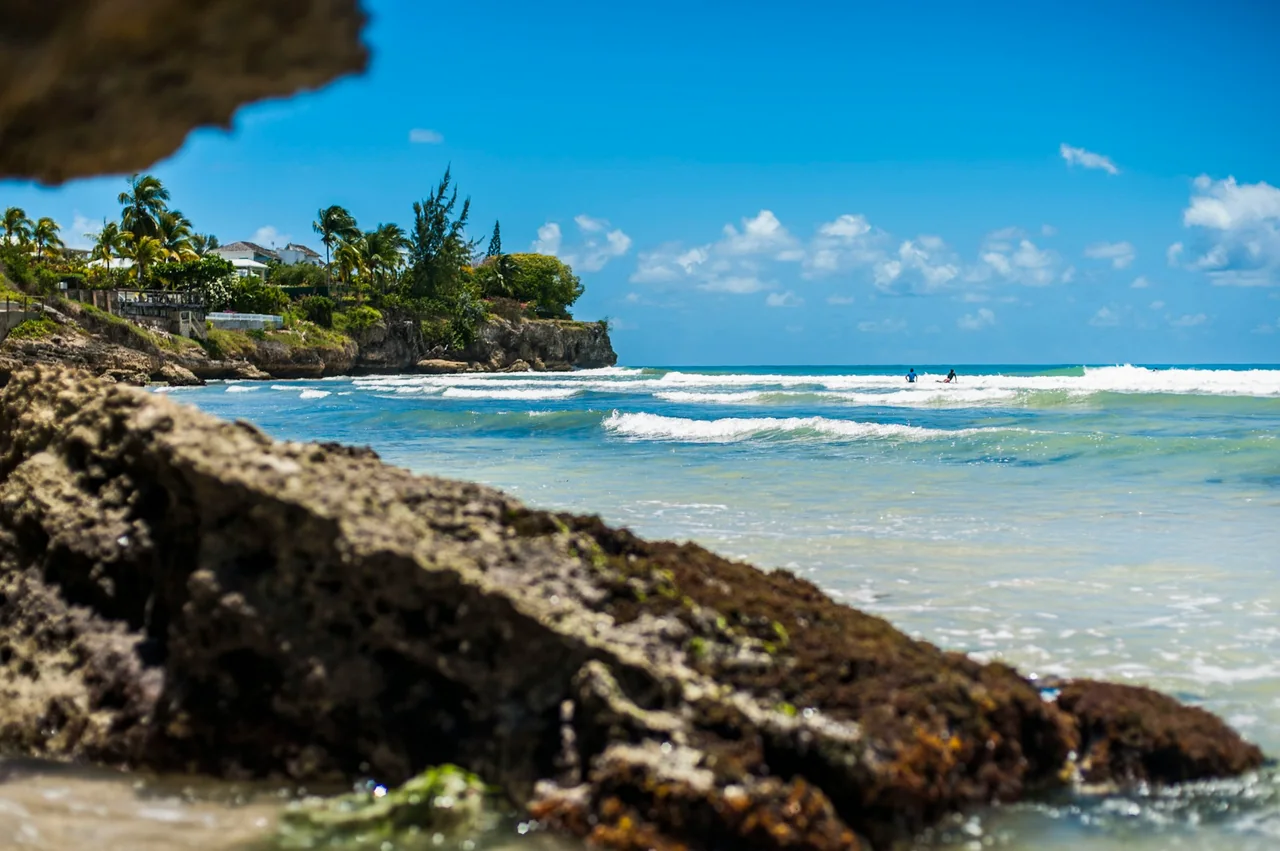
Two things in that advisory matter specifically to solo travelers, and most guides skip both.
First, the State Department describes petty crime as common in tourist areas, purse snatching and pickpocketing, crimes of opportunity rather than violence. Tourists are not flagged as high-risk for violent crime.
Second, the advisory specifically warns against walking alone at night, particularly on beaches or in poorly lit areas. If your mental picture of this trip involved a solo moonlit walk back along the sand after dinner, that is the one habit worth dropping. Take a taxi.
Neither point makes Barbados a difficult destination. The practical version: don't leave valuables unattended on the beach, use licensed taxis after dark rather than walking the coast road, and stick to populated, lit areas at night. The West Coast (Platinum Coast) and South Coast tourist strips are well-patrolled during the day and early evening.
The advisory doesn't mention the thing that shaped my own trip most, so I will: catcalling. On Barbados it was close to unavoidable, frequent enough that I started answering back, because it's ridiculous. On the ride to the airport my driver, a woman, asked how the trip had been. Wonderful, I told her, except for the catcalling. She wasn't surprised. That's typical here, she said; every young woman and every woman on the island lives with it. I believe her, and I'll say it plainly: do better, Barbadian men. If you're a woman traveling on your own, go in expecting it.
Advisory levels change. Check the current Barbados advisory and the UK FCDO's Barbados page close to your departure date rather than trusting any blog, including this one.
Oistins Fish Fry: Don't Miss It
Oistins Fish Fry is a weekly Friday night tradition on Barbados' south coast: a beachside outdoor market where vendors grill fresh fish, flying fish (the island's national dish), lobster, and chicken over open fires. It's one of the Caribbean's best local food experiences: lively, cheap, and completely comfortable to attend alone. Hundreds of people are there, tables are communal, and the music and energy make it one of those evenings you'll remember. It also runs on Saturdays at lower volume.
The West Coast: Where to Swim
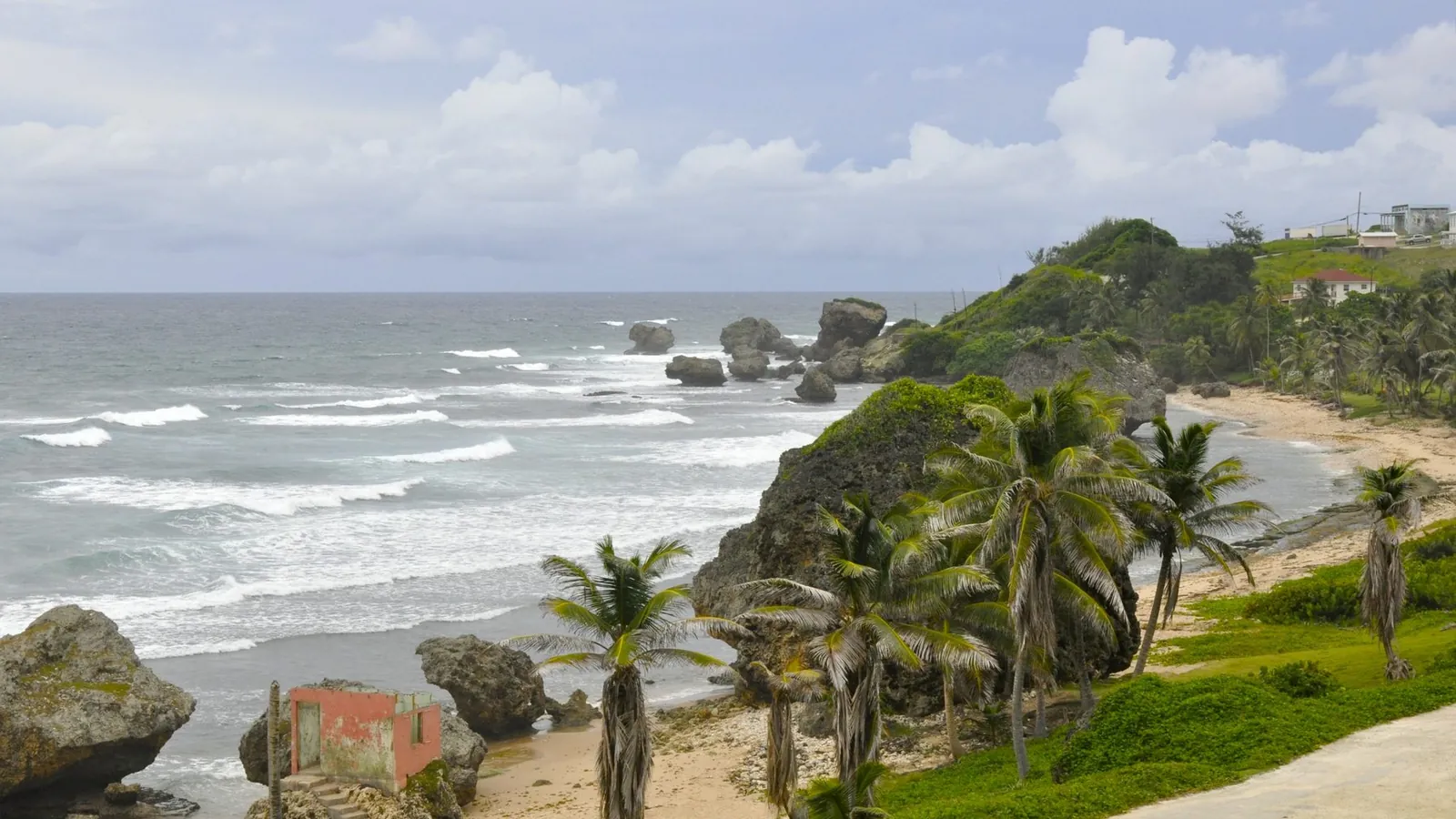
The Platinum Coast on Barbados' west side faces the Caribbean Sea and has the calmest, clearest water on the island. Paynes Bay and Mullins Beach are the most beautiful, calm enough for swimming and snorkeling, with beach bar access. The east coast (Bathsheba) is dramatic and wild but the Atlantic surf is too powerful for swimming, better for photos and the Soup Bowl if you're a surfer.
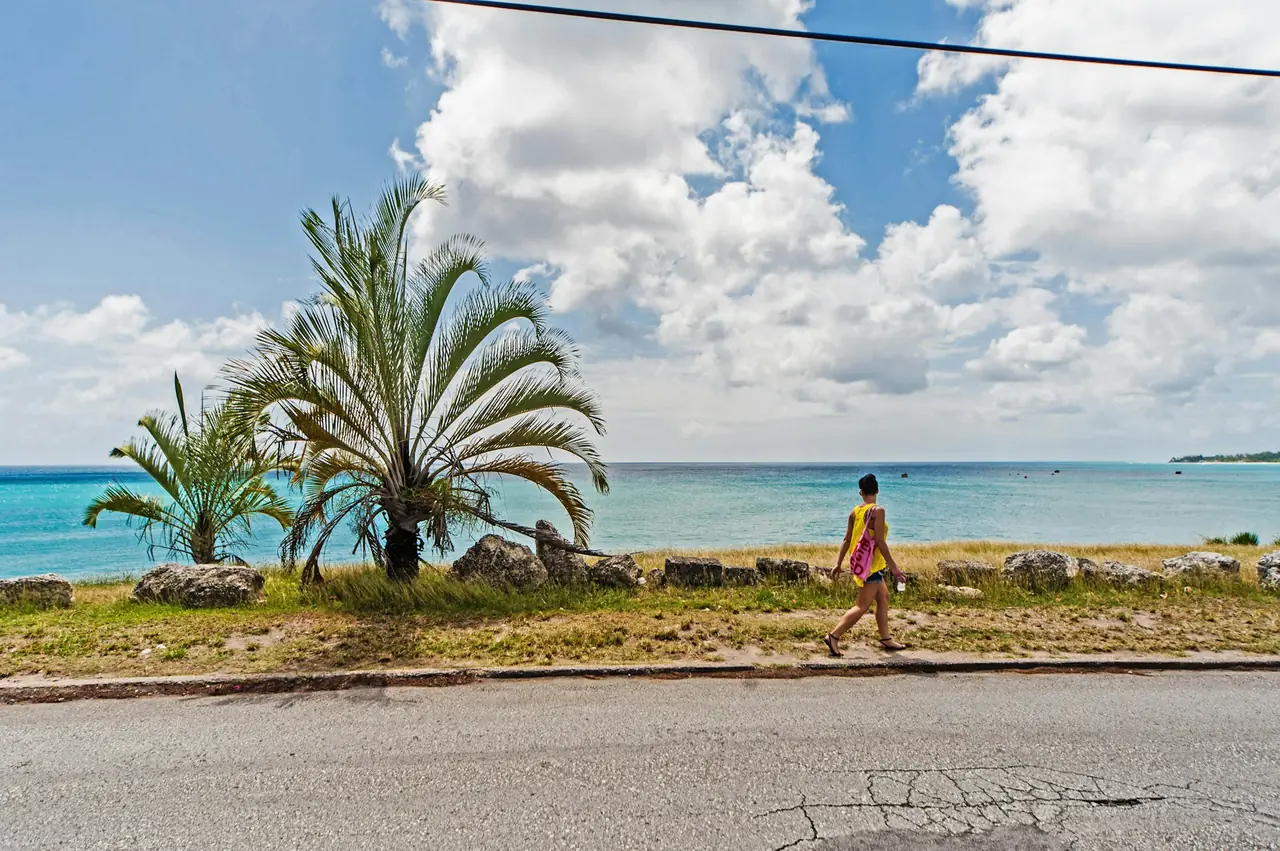
Where I Stayed and How I Got Around
I based myself at the Dover Beach Hotel on the south coast, with Dover Market close by. For the essentials I walked to the Massy Stores supermarket in Oistins, then ate across the street at Surfer's Café.
I rented a car, and it takes a moment of recalibration. Barbados drives on the left, and the island is stitched together with roundabouts. Once that clicks, it's small enough to cover with ease: south coast to north coast takes roughly 45 minutes to an hour in normal conditions, and I drove around most of the island over the trip. If you'd rather not drive, the Transport Board's route finder maps the public bus network.
Two things I'd book again without hesitation: the lunch cruise with Calabaza Sailing Cruises, and a lesson at Barry's Surf Barbados, a great place to take a class whatever your level.
Harrison's Cave and the Island Interior
Harrison's Cave is a remarkable crystallized limestone cavern in the island's interior. Electric tram tours take you through stalactite formations, underground streams, and pools. It's unusual for a Caribbean island to have this kind of geological attraction and it's worth a half day. The interior parishes of Saint John and Saint Joseph are also worth driving through, green and hilly in a way that surprises people who expect Barbados to be flat.
Rum: A Cultural Pillar
Barbados is the birthplace of rum as a commercial product, and Mount Gay is the oldest continuously operating rum distillery in the world. Doing it properly is one of the best afternoons on the island alone, but there is a booking trap that catches a lot of people, so read this before you reserve anything.
The Visitor Centre and the distillery are two different places, an hour apart.
The Visitor Centre is in St Michael, near Bridgetown, about three miles west of the centre. Tastings pair a guided flight of rums with the brand's history; check what's running before you go. There is no distillery on site. You will not see rum being made.
The actual distillery is in St Lucy, the northernmost parish, on the site where Mount Gay has distilled for over 300 years. That is where you walk the working estate (the original well, the molasses house, fermentation, distillation, the bonds) and it is the tour worth travelling for if the production is what interests you.
If you book without noticing, you will arrive at a tasting room expecting a factory. Even the resale listings warn you to tell your taxi driver which one you mean.
Two things at the distillery that don't apply at the Visitor Centre:
- Dress code, enforced. Tops must cover the arms and enclosed shoes are required. It is a working facility. Sandals will not get you in, though shoes can be rented for a fee.
- Strictly 18+. No children at all, unlike the Visitor Centre tastings.
And the thing that matters most if you're on your own: some Mount Gay experiences include hotel transport and some don't. The Signature Tasting at the Visitor Centre does not. You make your own way. The Discovery Experience and the Thursday evening cocktail session do include transport, collecting from west coast hotels.
That is not a small detail when you're travelling alone. You are tasting four rums and then need to get home, you are paying the full taxi fare yourself rather than splitting it, and Barbados' advisory specifically warns against walking alone after dark. The tours that include transport cost more and are usually the better call for a solo traveller. You're buying the return journey as much as the rum.
Cancellations are refundable at 50% up to two days before, nothing after that.
St Nicholas Abbey in the north is the quieter alternative and pairs naturally with the St Lucy distillery on the same trip north, a preserved plantation great house with its own rum production and unusually atmospheric grounds. Both work well alone.
Practical Info for Your Trip
- Best time to visit: December through April (dry season). October is shoulder season. Some rain but manageable, significantly cheaper.
- Getting there: Grantley Adams International Airport (BGI) has direct flights from the US (New York, Miami), UK, and Canada.
- Getting around: Public buses are cheap and go almost everywhere. There are two kinds and they behave differently: government blue buses run to timetables and fixed stops, while privately-run ZR vans are faster, fuller, louder and stop wherever you flag them. Both are a flat fare. ZRs are an experience; blue buses are the calmer choice with luggage.
- Renting a car: what I did, and the easiest way to see the whole island. Driving is on the left, and roundabouts are everywhere.
- Taxis: not metered. Rates are set by route, so agree the fare before you get in rather than at the end. This is normal practice and nobody will find it rude.
- After dark: the State Department specifically warns against walking alone at night, particularly on beaches or unlit roads. Buses thin out considerably in the evening. Budget for taxis rather than assuming you'll get a bus back from dinner. It is the single most common way a solo trip here gets uncomfortable.
- Currency: Barbadian Dollar (BBD), pegged 2:1 to USD. USD accepted widely.
- Solo safety rating: Excellent.
Where to go next
- how Barbados compares to the rest of the region, if you are still choosing an island.
- the safety rankings, for the advisory levels side by side.
- Antigua: a short hop away, quieter, and easier on the wallet.
What the official advice says
Barbados, Level 1: Exercise normal precautions
State describes Barbados as generally safe but flags petty crime targeting visitors in tourist areas.
Source: U.S. Department of State, issued April 2026. Checked 16 August 2026. Advisory levels change, so check the source before you book.
Common questions
Is Barbados safe for solo travelers?
Barbados has held the US State Department's lowest advisory level for years. The flagged risks are petty theft in tourist areas, and the advisory specifically warns against walking alone at night on beaches or unlit streets. Take a taxi after dinner rather than the beach route home.
When is the best time to visit Barbados?
December to April is the dry season and the most reliable weather, but also the most expensive. October trades some rain for noticeably lower rates and thinner crowds, which is the better deal if your dates are flexible.
How do you get to Barbados?
Everything arrives at Grantley Adams International (BGI) in the south of the island. Direct routes run from New York and Miami, the UK, and Canada, so most solo travelers can reach it without a connection.
What currency is used in Barbados?
The Barbadian dollar, fixed at two BBD to one US dollar. US dollars are accepted almost everywhere, and the fixed peg means you can halve any BBD price in your head to get the USD figure.