The French Side of St Martin: A Solo Travel Guide
Grand Case is the Caribbean's culinary capital, and eating alone there is genuinely pleasant rather than something to endure.
Quick facts
- Region
- French Antilles / Sint Maarten
- Best months
- Dec–April (dry season)
- Typical temperature
- ~27°C / 81°F
- Airport
- Princess Juliana (SXM)
- Budget
- Mid to high-range
- Solo Safety
- Good, French side calmer
- Best Street
- Grand Case restaurant row
- Best Beach
- Orient Bay or Friar's Bay
My trip
- Visited
- February 2025
- Length
- A week to ten days
- Stayed
- Airbnb, Baie de Grand Case
- Got around by
- Rental car
- Travel style
- Mid to high-range
Region: French Antilles / Sint Maarten · Best for: Foodies, beach lovers, travelers who want the Caribbean with French flair
The French side of Saint-Martin is made for long brunches and slow afternoons, and it's best explored by car, beach to restaurant to beach. I stayed in an Airbnb on Baie de Grand Case and drove from day one.
Short answer: The French side of the island is the quieter, better-eating half. Grand Case is the reason to come, a single street of restaurants where eating alone is genuinely pleasant, and Orient Bay is the best beach. There's no border control between the French and Dutch sides, but rent a car: buses are unreliable and taxis are expensive.
The island of Saint-Martin/Sint Maarten is split between a French side (Saint-Martin, part of France's overseas territory) and a Dutch side (Sint Maarten, autonomous within the Kingdom of the Netherlands). Most people fly into the Dutch side's Princess Juliana Airport and many never cross into France, which means the French side is consistently less crowded, more authentic, and in my opinion, significantly more interesting. For a solo traveler, the French side is an easy, relaxed, and genuinely rewarding destination.
Is Saint-Martin Safe for Solo Travelers?
One island, two countries, and (this is the part that surprises people) two separate US travel advisories. The Dutch south is covered by the Sint Maarten advisory; the French north falls under the State Department's French West Indies entry, grouped with Guadeloupe, Martinique and Saint Barthélemy. You can cross the border on foot without a checkpoint and move between two different official risk assessments, two legal systems, two emergency numbers and two currencies.
Because the ratings are issued separately and can move independently, check both on the advisory index before you travel rather than assuming one covers the island.
Practically, the French side runs on French law and EU-standard infrastructure, which shows up in road quality, hospital standards and policing, and is a genuine part of why it feels different from the south. Emergency services on the French side use 112, the European number; the Dutch side uses 911. Save both, because which one works depends on which half of a small island you happen to be standing in.
Grand Case and Marigot are welcoming and busy in the evenings, and eating alone in Grand Case, a strip of restaurants where that's completely ordinary, is one of the easier solo dinners in the Caribbean. Standard awareness applies after dark away from those centres, and beach theft is the usual realistic risk.
The euro is the official currency on the French side, though US dollars are widely accepted at rates that quietly favour the seller.
Grand Case: The Culinary Capital of the Caribbean
Grand Case is a small village on the French side's north coast with one of the most remarkable restaurant concentrations in the Caribbean. The main street, Boulevard de Grand Case, is lined on both sides with restaurants serving everything from sophisticated French-Creole cuisine to incredibly cheap Creole food from the lolos. Open-air BBQ shacks that are the local eating institution. For solo dining, the lolos are perfect: communal seating, no reservations needed, you order at the counter and eat at a plastic table watching the street. The food (grilled lobster, ribs, chicken, plantains) is excellent and extremely affordable compared to the sit-down restaurants.
The Day the Water Ran Out
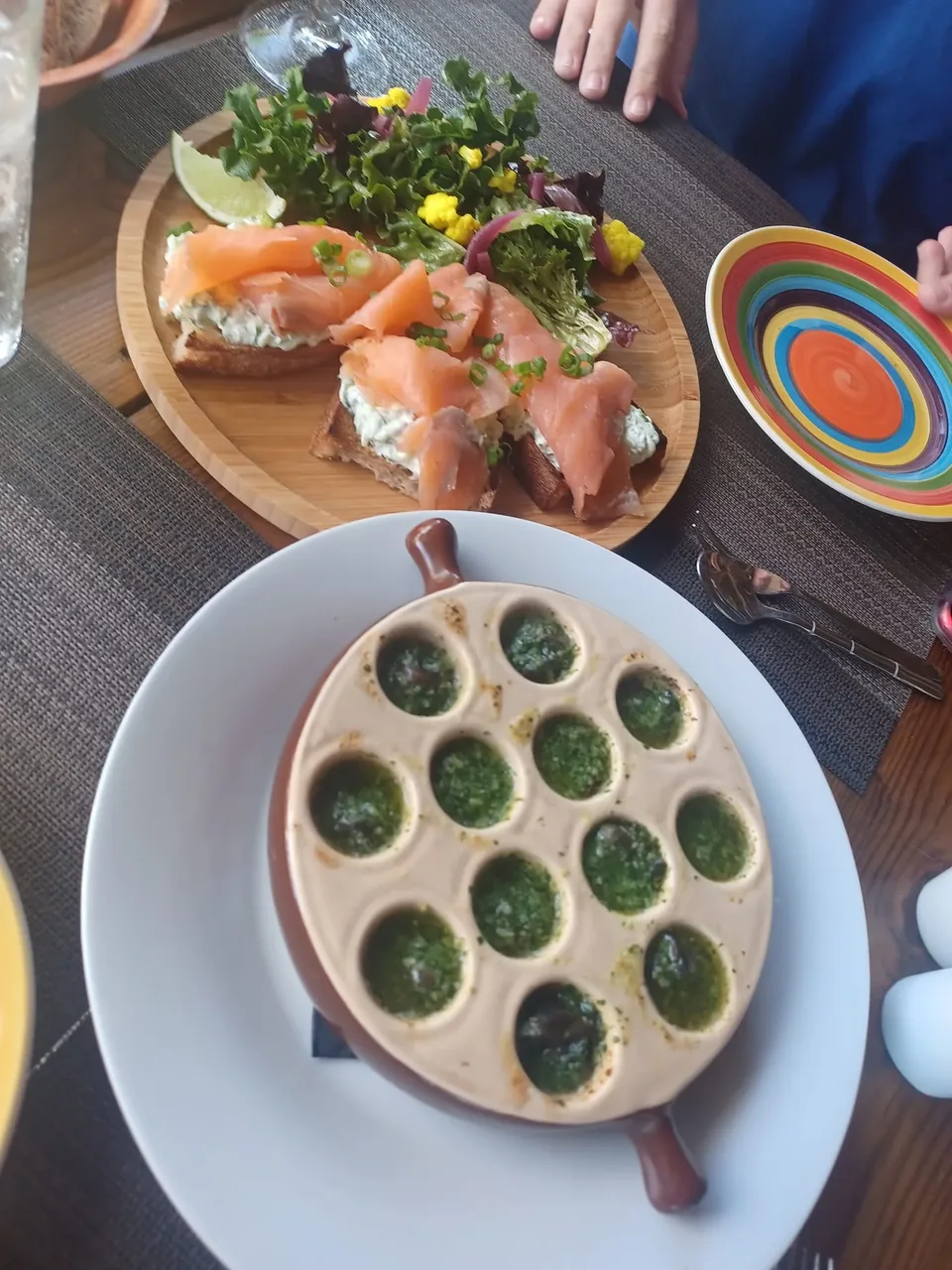
Grand Case gave me a great brunch at Rainbow Cafe. Then, on the second day, it gave me no water. I was ready to step into the shower, and nothing came out. Reaching the Airbnb's management turned into its own saga, and in the end I had to go through Airbnb itself. The explanation, when it finally came: there was no water on that whole part of the island, which is apparently very common. The local plumbing can't keep up with the influx of buildings and people it now serves.
The host eventually let us shower at another Airbnb they manage, one that still had water. By the time the ordeal was over, I realized I hadn't eaten or had anything to drink all day. The only place still open was a local bar, and it was around 11pm. I drank water like I'd crossed a desert, ordered some overpriced burritos, and called it a day.
If you're booking an Airbnb on the French side, ask the host directly how often the water goes out and what the backup plan is.
Orient Bay: The Island's Best Beach
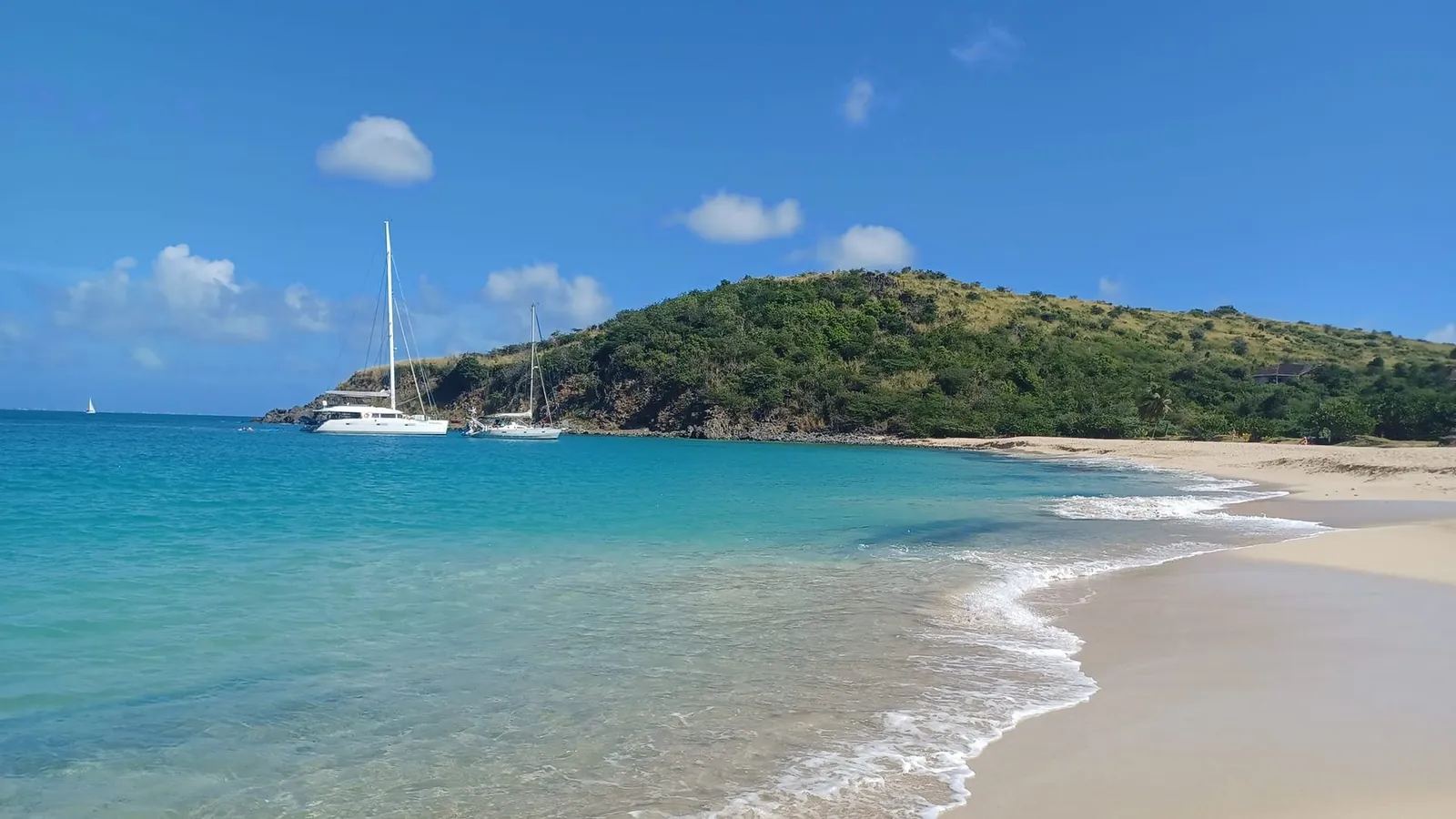
Orient Bay runs about 2km along the French side's northeast coast, and it's one of the Caribbean's finest beaches: sheltered, turquoise, shallow on entry, with a strip of beach bars, chair rentals and water sports operators. The Atlantic trade winds make it a hub for kitesurfing and windsurfing. The atmosphere is European beach club rather than American resort, and spending a full day there alone is easy.
I spent a full day at Orient Beach and ate wonderfully there. Snails are my favorite, and they're worth ordering if you see them on the menu. People were friendly everywhere I went, but on either side of the island, the service is slow. Settle in and let it be.
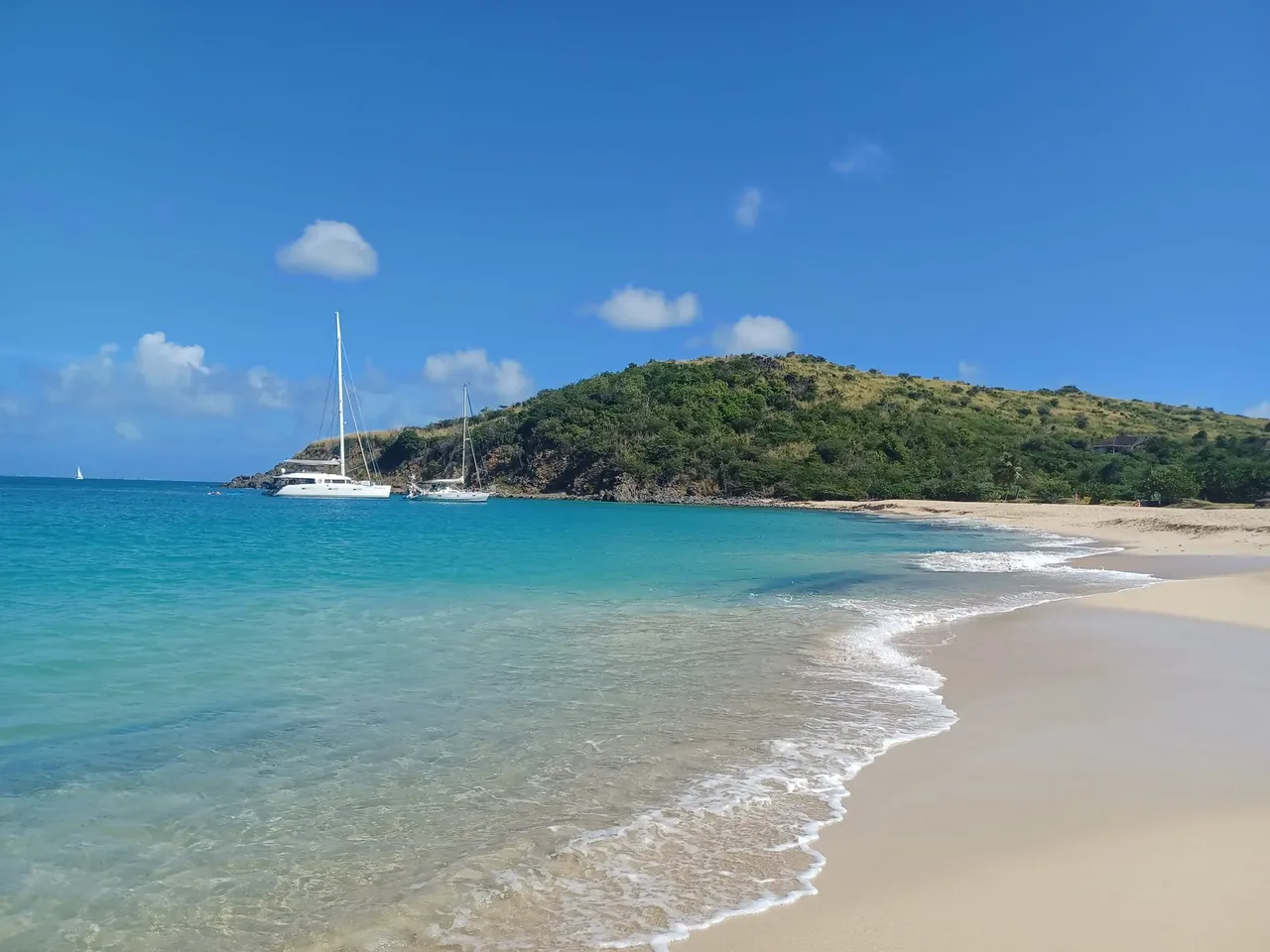
Worth knowing before you arrive: one defined section is clothing-optional, and the rest is not.
Orient Bay's reputation as "the nude beach" is a lot broader than the reality. The naturist stretch is a single section at the end nearest the former Club Orient resort; the other 80-odd percent of the beach runs on ordinary swimwear. If you walk far enough along the sand the atmosphere changes and you'll know it.
Two things follow from that. If you'd rather not wander into it unprepared, stay near the main restaurant cluster. And if it's what you came for, it's a long-established and unremarkable part of the beach rather than anything furtive.
More broadly, toplessness is unremarkable across the French side and nobody will look twice. Friar's Bay, nearer Marigot, is smaller and quieter with its own well-established clothing-optional section and a mixed local-and-visitor crowd, a good half-day if Orient Bay feels too much like a resort strip. If you'd rather be in the water than on it, Le Galion Beach, just past Orient, is shallower and calmer, protected by a reef, and popular with kitesurfers without the crowds. The Butterfly Farm, nearby, is a small, well-run stop if you want an hour off the sand.
The legal point that catches people out on an island with an open border: nudity is accepted on the French side and public nudity is banned on the Dutch side. You can cross between the two without a checkpoint, a passport or any signage, and the rules change underneath you. Worth knowing when you're deciding what to wear to a beach you haven't been to yet.
Getting Around: Renting a Car
How I got around: a rental car. Donkeys wander the roadsides, and if you stop to say hello, expect a curious head pushed straight through the window.
Rent a car. It's the only way to properly explore both sides of the island and reach the best beaches at your own pace. Driving is on the right, roads are in reasonable condition, and there's no actual border between the French and Dutch sides. You drive through without stopping. Sax Car Rental on the French side is a well-regarded local option. Rates are reasonable; book in advance for peak season.
Practical Info for Your Trip
- Getting there: Fly into Princess Juliana Airport (SXM) on the Dutch side, direct flights from many US cities. The French side is a 15–20 minute drive.
- Currency: Euro (€) on the French side; US Dollar on the Dutch side. Both accepted islandwide.
- Language: French on the French side; Dutch and English on the Dutch side. English is widely understood everywhere.
- Best time to visit: December through April (dry season). January–February is the sweet spot, low chance of rain, full tourist season.
- Solo safety rating: Good on the French side. More caution warranted in parts of the Dutch side at night.
Where to go next
- the Dutch side: same island, different country, different everything.
- Antigua, the nearest island worth a separate trip.
What the official advice says
Saint-Martin, Level 1: Exercise normal precautions
Covered by the French West Indies advisory.
Source: U.S. Department of State, issued August 2024. Checked 16 August 2026. Advisory levels change, so check the source before you book.
Common questions
What's the difference between Saint-Martin and Sint Maarten?
They are the same island split between France and the Netherlands, with an open border you can walk across. The practical consequences are real: separate travel advisories, separate legal systems, different emergency numbers, and euros in the north against dollars in the south.
What currency is used on the French side?
The euro officially, though US dollars are taken almost everywhere. The rate offered when you pay in dollars generally favours the business rather than you, so euros are worth having.