Solo Travel Guide to Curaçao
Everything a solo traveler needs for Curaçao: Jan Thiel Beach, Klein Curaçao, Willemstad, and why the island sits outside the hurricane belt.
Quick facts
- Region
- Dutch Caribbean (ABC Islands)
- Best months
- Year-round, trade winds
- Typical temp
- 27°C / 81°F
- Airport
- Hato International (CUR)
- Budget
- Mid-range
- Solo safety
- Excellent
- Must see
- Willemstad UNESCO old town
- Best beach
- Jan Thiel or Klein Curaçao
My trip
- Visited
- 2019
- Length
- A week to ten days
- Stayed
- Several hotels and Airbnbs
- Got around by
- Rental car
- Travel style
- mid
Curaçao is best seen by moving through it. When I stay somewhere for a week or two, I like to change hotels and Airbnbs on purpose, because each move shows me a different corner of the island, and that's how I did Curaçao, with a rental car for the beaches on the west side.
Curaçao sits just outside the hurricane belt, which means the weather is reliable in a way most of the Caribbean isn't: sunny, breezy, and rarely rained out. If you're looking for a Caribbean trip that's both safe and genuinely interesting to do alone, Curaçao belongs near the top of your list.
Is Curaçao safe for solo travelers?
Yes. Curaçao is one of the safer Caribbean islands for people travelling alone. The main tourist areas (Willemstad, Jan Thiel, Mambo Beach) are well patrolled and busy with international visitors. Normal solo travel sense still applies: don't walk alone at night in unfamiliar neighbourhoods, don't leave valuables on the sand, and trust your gut. Locals are warm and helpful, and the Dutch influence has shaped a fairly orderly tourism setup.
The atmosphere helps too. Most of the tourists I met were Dutch, with very few Americans or anyone else, and there's none of the beach hustling you get used to in Mexico or the Dominican Republic. It was also here that I heard reggaeton for the first time.
Before you book, it's worth reading the current US State Department advisory for Curaçao. It changes rarely, but it changes.
Where to spend your days: Jan Thiel Beach
Jan Thiel is the easiest beach base on the island. The beach clubs here are set up well for solo travelers: rent a lounger, order food and drinks to your spot, and be surrounded by other people without feeling like a third wheel. The water is calm and clear, and you can rent paddleboards and kayaks directly on the beach.
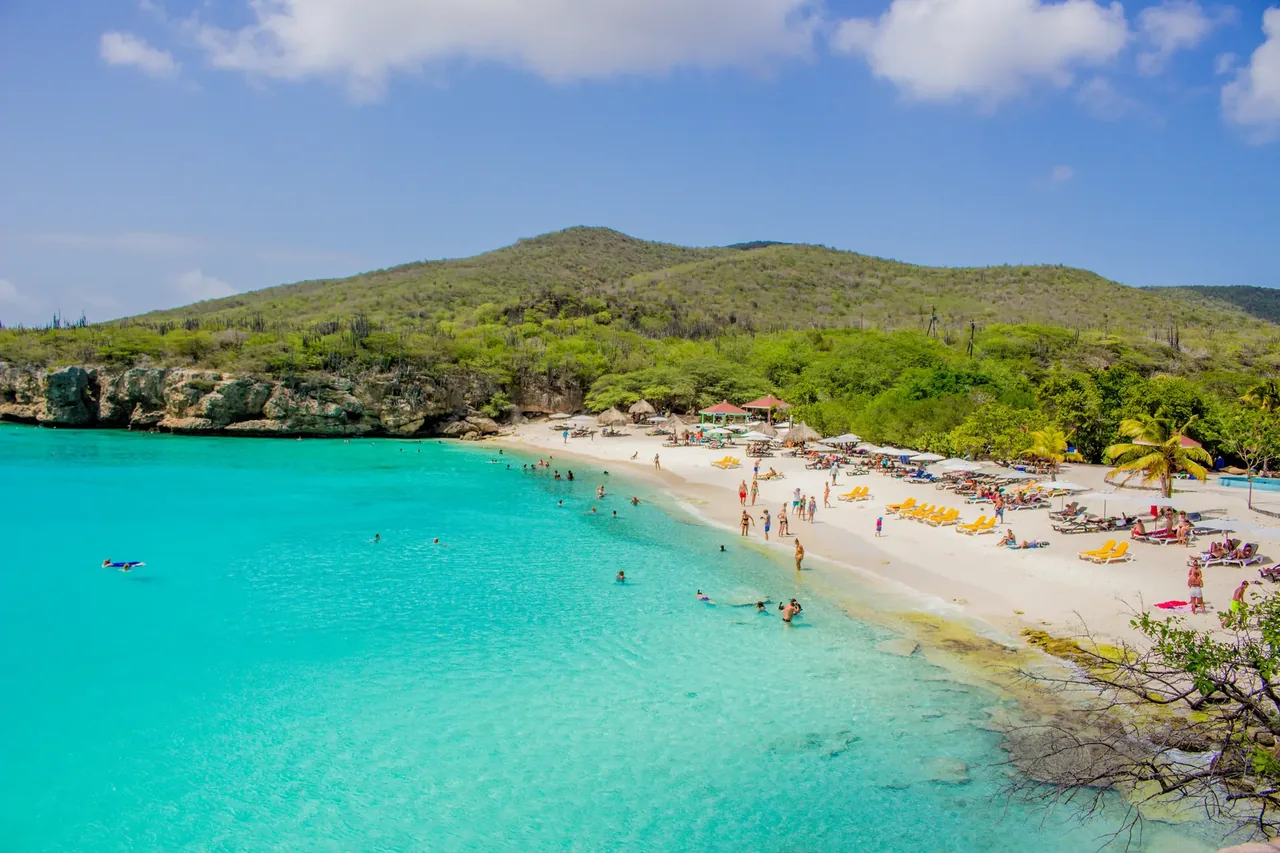
If you want a livelier scene, Mambo Beach Boulevard is a short distance away, a string of restaurants and bars that fill up in the early evening. It's a good spot for a solo dinner where you can people-watch instead of staring at your phone. For a quieter beach day, head to the island's west side: Grote Knip (Playa Kenepa Grandi), the beach in the photo above, has some of the bluest water on Curaçao and a cliff you can jump from, and Cas Abao Beach nearby charges a small entry fee for calm water and better facilities.
My own beach days were at Grote Knip, Cas Abao and Parasasa Beach. One of the hotels I stayed in no longer exists; it has since been demolished and there's nothing worth mentioning on the site now, but the beach in front of it was beautiful. I'll let you find that one on your own.
Willemstad: the photogenic capital that actually has depth
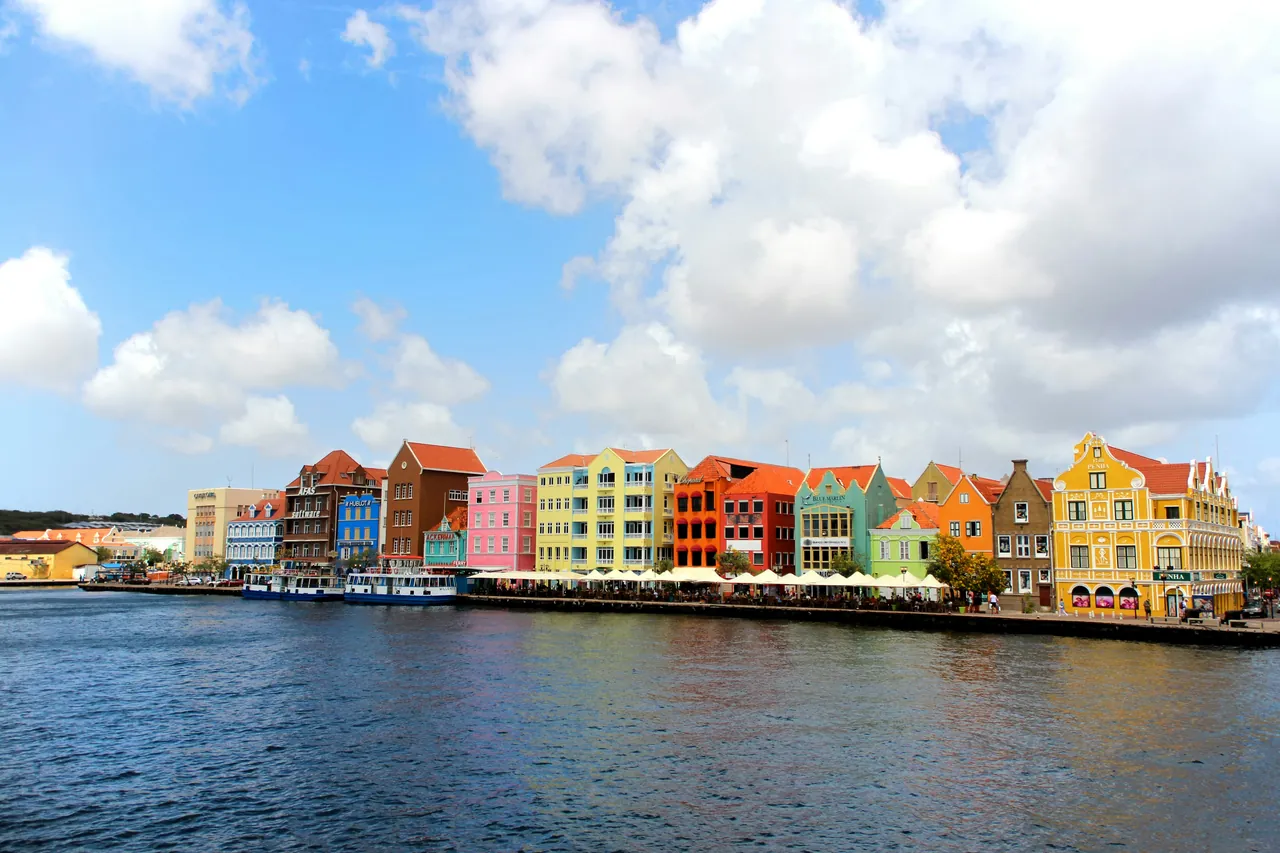
Most people come to Willemstad for the candy-coloured Dutch colonial buildings along the Punda and Otrobanda waterfronts, and they are genuinely stunning. But there's more here than a backdrop.
The Queen Emma Bridge is the thing to understand before you plan a day here, because it dictates how the city works.
It's a pontoon bridge: 167 metres of it, floating on barges across St Anna Bay, opened in 1888 and locally called the Swinging Old Lady. It's pedestrian-only, free, and it's the direct link between Punda on the east side and Otrobanda on the west. Crossing takes a couple of minutes and it moves under you, which is disconcerting the first time and then becomes the point.
Here's the catch: it swings open for ships, and while it's open you cannot cross. Not a fixed schedule. It opens whenever an oceangoing vessel needs through, and Willemstad is a working port. Openings can be brief or can leave you stuck for a while. There is a free ferry that runs when the bridge is open, so you're never actually trapped, but it's slower and less obvious.
The practical version: don't build a tight plan that depends on crossing at a specific minute. If you have a restaurant booking on the other side, leave a margin. And if the bridge does open while you're waiting, stop and watch it, because that's the show.
Cross it at night as well as during the day. It's lit, and the Handelskade waterfront from the middle of the bay is the view the island puts on postcards.
Beyond the bridge, spend half a day wandering: the floating market where Venezuelan vendors sell produce from their boats, and the back streets of Punda with galleries, bakeries and Curaçao liqueur tasting rooms. The UNESCO-listed historic district is compact enough to cover comfortably on foot in a few hours, which makes it easy to explore alone, and both sides of the bay are walkable from the bridge, so you don't need a car for any of it.
Day trip to Klein Curaçao
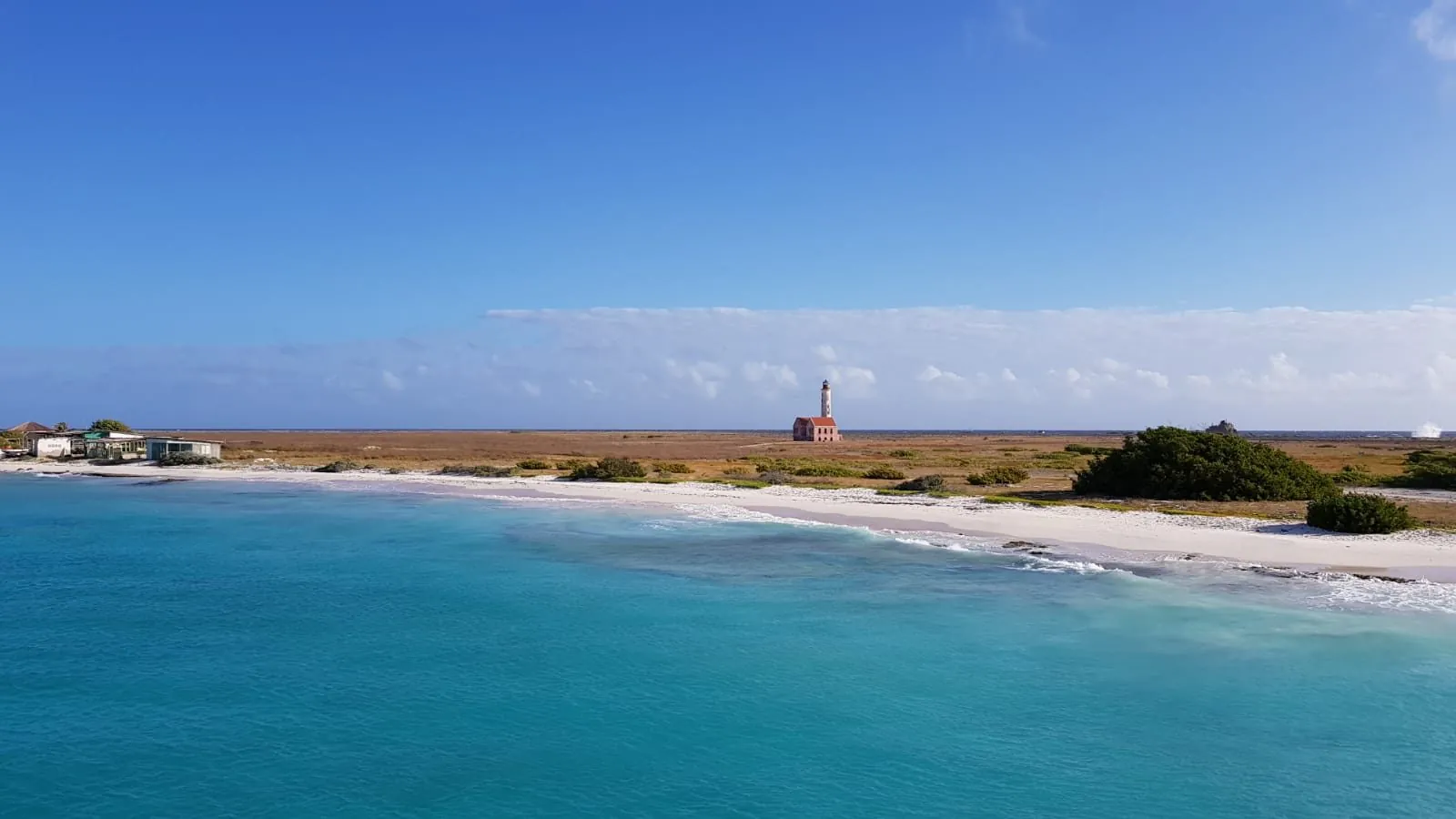
This was the highlight of the whole trip. Klein Curaçao is a tiny uninhabited island about two hours by boat from the main island: white sand, turquoise water, a rusted lighthouse, and a shipwreck you can snorkel around. It looks like a screensaver and it is entirely real.
Several operators run full-day trips from the marina in Willemstad. The boat fills with a mix of travelers, snorkel gear and lunch are included, and this kind of group day trip is one of the easiest ways to meet people when you're on your own. I went out on the Mermaid boat and met wonderful people on board, the kind of company I'd never otherwise have crossed paths with.
Practical note: bring reef-safe sunscreen, a hat and water shoes. There's almost no shade, and the coral at the water's edge is sharp.
Eating alone in Curaçao
Don't leave without trying keshi yena, a stuffed cheese dish with Dutch colonial origins that has become one of the island's signature meals. It sounds odd and tastes deeply savoury. Kabritu stoba, slow-braised goat stew, appears on most local menus and is equally worth ordering.
The food is great and sometimes unexpected: I saw iguana stew on one menu.
For the best and most affordable food, look beyond the main tourist strips. Family-run spots and roadside snekis serve better food at a fraction of resort prices. Kas di Piskado in Punda is a well-known local fish place, go early, they sell out. On the west side near the Knip beaches, La Bohème is a good sit-down option if you want something more polished than a sneki after a beach day. If budget stretches further than mid-range, Baoase Luxury Resort near Mambo Beach is the island's top splurge stay, private-pool villas and beachfront dining, worth knowing about even if you're not booking it.
Getting around solo
How I got around: a rental car, as on most of my island trips, and it made the west side beaches easy.
Public transport is limited, so renting a car is the best option for exploring beyond the tourist hubs. Rates are reasonable, driving is on the right, and the island is small enough to navigate without stress. Taxis work in Willemstad and the beach areas but get expensive over distance. If you'd rather not drive, several operators run organised day trips to the main sites.
Practical info for Curaçao
- Best time to go: November through May is the dry season, but the trade winds make this a genuinely year-round island.
- Currency: Netherlands Antillean guilder (ANG). USD is widely accepted, carry some local cash for markets and small places.
- Language: Papiamentu locally; Dutch, English and Spanish all widely spoken. Communication is easy.
- Getting there: direct flights from New York (JFK), Miami and Amsterdam into Hato International (CUR). Roughly 4.5 hours from NYC.
- Visa: US and EU passport holders don't need one for short stays.
- Solo safety: high. Locals are used to independent travelers, and the main areas stay busy through the day.
How long to spend in Curaçao
Curaçao is one of those trips where the weather cooperates, the island surprises you, and everything is easier than you expected. It's less overrun than much of the Caribbean, which means you get room to breathe. For a solo traveler who wants beach days, walkable culture and real underwater adventure, I'd go back without hesitating.
Where to go next
- Bonaire, 30 minutes away and the better island if diving is the point.
- Aruba, the third ABC island, easier and busier.
- where Curaçao ranks, against the rest of the Caribbean.
What the official advice says
Curaçao, Level 1: Exercise normal precautions
Source: U.S. Department of State, issued August 2024. Checked 16 August 2026. Advisory levels change, so check the source before you book.
Common questions
Is Curaçao safe for solo travelers?
Yes. It is one of the safer Caribbean islands for solo travelers. The main tourist areas are busy and well patrolled, and locals are used to independent travelers. Normal precautions apply after dark and in unfamiliar neighbourhoods.
Do I need to rent a car in Curaçao?
If you want to see anything beyond the beach clubs and Willemstad, yes. Public transport is limited and taxis get expensive over distance. Driving is on the right and the island is small and easy to navigate.
When is the best time to visit Curaçao?
Any time. Curaçao sits outside the hurricane belt and the trade winds keep it comfortable year-round. The dry season runs November through May if you want the lowest chance of rain.
Is Curaçao expensive?
Mid-range. Resorts and beach clubs cost what you'd expect in the Caribbean, but eating at local snekis and family-run restaurants brings your daily spend down substantially.