Solo Travel Guide to Bonaire: Delfins Beach Resort and Beyond
A solo traveler's guide to Bonaire: world-class shore diving, a genuinely safe island, and one of the easiest Caribbean trips to do alone.
Quick facts
- Region
- Dutch Caribbean (ABC Islands)
- Best months
- Year-round, trade winds help
- Typical temperature
- ~30°C / 86°F
- Airport
- Flamingo (BON)
- Budget
- Mid-range (diving adds cost)
- Solo Safety
- Excellent
- Famous For
- World's best shore diving
- Wildlife
- Flamingo colonies
My trip
- Visited
- April 2025
- Length
- A week to ten days
- Stayed
- Delfins Beach Resort
- Got around by
- Rental car from BON; essential for beaches/dive sites
- Travel style
- Mid-range (diving adds cost)
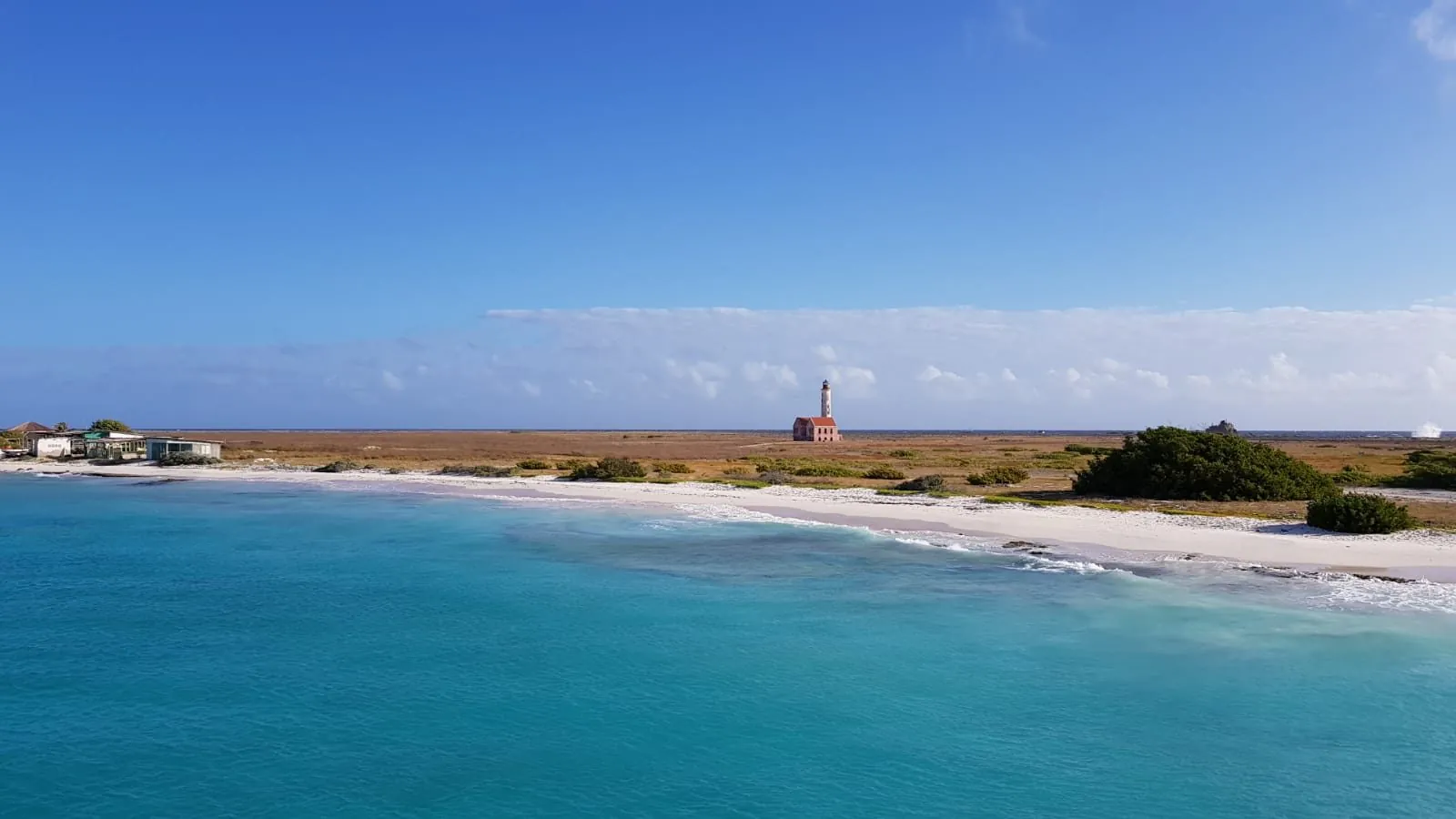
Bonaire rewards anyone willing to drive to the end of every road: flamingo flats, the wild north, windsurfers skimming the water in the south. I covered nearly all of it in a rental car, starting each morning with fresh bread and coming home to the Delfins Beach Resort on the south end.
Bonaire doesn't try to be glamorous. It's a flat, wind-scoured island in the southern Caribbean with a fraction of the name recognition of Aruba or Curaçao, and that's exactly why I loved it. I stayed at Delfins Beach Resort on the island's south end, and what I found was one of the best solo travel experiences I've had in the Caribbean: genuinely safe, deeply relaxed, and built around one of the most extraordinary reefs on the planet.
Two Fees You Must Pay Before You Get in the Water
Bonaire charges two separate mandatory fees, they're commonly confused with each other, and one of them has a timing quirk that catches people out. Sorting this before you fly saves a bad morning.
Visitor Entry Tax. Every visitor pays it, per person, online in advance through the government portal or by card at Flamingo Airport. Cash is not accepted, so you need a working payment card. Full details and current rates.
STINAPA Nature Fee. This is the one people miss. It's separate from the entry tax, and it's mandatory for anyone entering the sea, not just divers. Swimming, snorkelling, kitesurfing, windsurfing, kayaking all count. It also covers Washington Slagbaai National Park. Rangers check along the waterfront and ask for proof.
The quirk: the Nature Fee runs by calendar year, January 1 to December 31, regardless of when you buy it. Buy it in late December and it expires days later. A trip spanning New Year means paying twice. STINAPA's own FAQ confirms the rules and exemptions.
Together, the two add up before you've paid for a single dive, so budget for them rather than discovering them at the airport.
Is Bonaire Safe for Solo Travelers?
The US State Department rates Bonaire at Level 1, Exercise normal precautions (as of August 2024), and the Dutch Caribbean as a whole has long sat at the calm end of the scale.
The island's structure does the rest. It's small, the diving economy means independent travellers arriving alone are completely normal rather than notable, and the population is tiny enough that unfamiliar quickly stops being unfamiliar. Petty theft, particularly from parked vehicles at dive sites, is the realistic concern, and it's the one thing locals will warn you about: leave nothing in the truck and leave it unlocked so nobody breaks a window to check.
The genuine risk on Bonaire is in the water, not on land. Shore diving is the island's whole appeal, and it means walking in from the roadside with no boat and no crew counting heads, so the safety net is the buddy beside you. Bonaire has its own hospital in Kralendijk and, crucially, a hyperbaric recompression chamber on the island, which is not something every dive destination can say. Make sure your travel insurance explicitly covers diving; standard policies frequently exclude it, and chamber treatment is expensive.
I never felt unsafe walking around, going in the water alone, or eating out by myself. The Delfins resort is calm and well-run, with a mix of couples, dive groups and solo guests.
Shore Diving: How Bonaire Actually Works
This is the part that makes Bonaire different from every other dive destination, and it changes how you plan a day.
Bonaire's entire leeward coast is the marine park, and the dive sites are reached from the road. They're marked with painted yellow stones at the roadside, each carrying the site name. You drive up, park, kit up at the truck, and walk in. No boat, no dive schedule, no group to wait for.
That's why almost everyone here rents a pickup truck rather than a car. You need the bed for tanks, and dive shops fill them on a swap basis so you can collect a fresh set and keep going. There is no meaningful public transport on the island, so a vehicle isn't optional if diving is why you came. Leave nothing inside it at the dive sites, and take your keys into the water in a dry pocket.
Arriving alone doesn't mean diving alone. Recreational dive training is built on the buddy system, and Bonaire's freedom works because people keep to it: you choose the site and the hour, and you still go in with a partner. Diving solo is a separate discipline with its own certification, not something to improvise on an unfamiliar reef.
Finding a buddy here is easier than almost anywhere. Before your first shore dive, every diver completes a marine park orientation and buoyancy check with a dive operator, and that's the natural moment to ask. Dive shops regularly pair up guests who arrive on their own, and Dive Friends Bonaire keeps buddy boards at several of its locations and points divers to a Buddy Bonaire WhatsApp group. A guided shore dive or a boat dive puts you in the water with others too.
Whoever you dive with, tell the dive shop or your accommodation where you're going, and choose sites where other trucks are parked over an empty stretch of roadside.
Staying at Delfins Beach Resort
My stay: Delfins Beach Resort on the south end of the island, with a rental car parked outside. Every morning started the same way: a drive to Van Den Tweel for fresh bread.
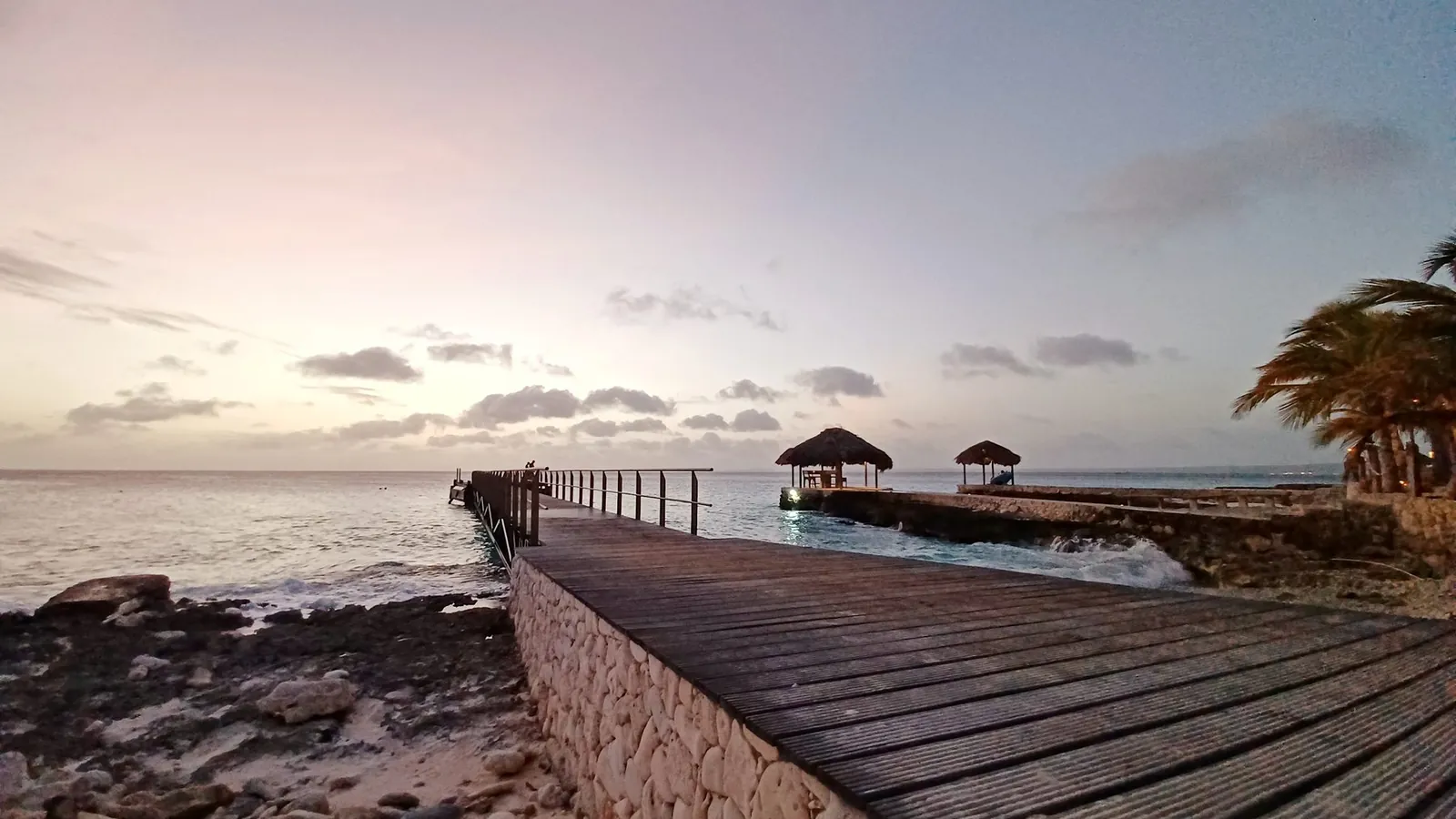
Delfins Beach Resort sits on Bonaire's south coast with direct access to the reef right off the shore. The layout is low-rise and spread out: private enough to decompress, but social enough that solo travelers find natural opportunities to meet people at the pool bar, the dive dock, or the evening restaurant.
The on-site dive shop is a major draw. You can walk off your terrace, grab your gear, and be underwater in minutes. Staff were welcoming to someone who arrived without a dive buddy, which, as a solo traveler, matters more than people realize, and they'll pair you with a guide or a group.
The resort also has a pool, spa, beach bar, and restaurant. For solo travelers the pool area is the social hub, low-pressure, easy to meet people. Evenings watching the sun go down over the water from the open-air restaurant are genuinely lovely.
Diving and Snorkeling: Why Bonaire Is in a Class of Its Own
Bonaire has been a protected marine park since 1979, and it shows. The reef is in better shape than almost anywhere else I've dived in the Caribbean: dense coral, extraordinary fish populations, visibility routinely exceeding 30 meters. There are over 80 shore-accessible dive sites. You just drive to a yellow rock marker, gear up on the roadside, and walk in.
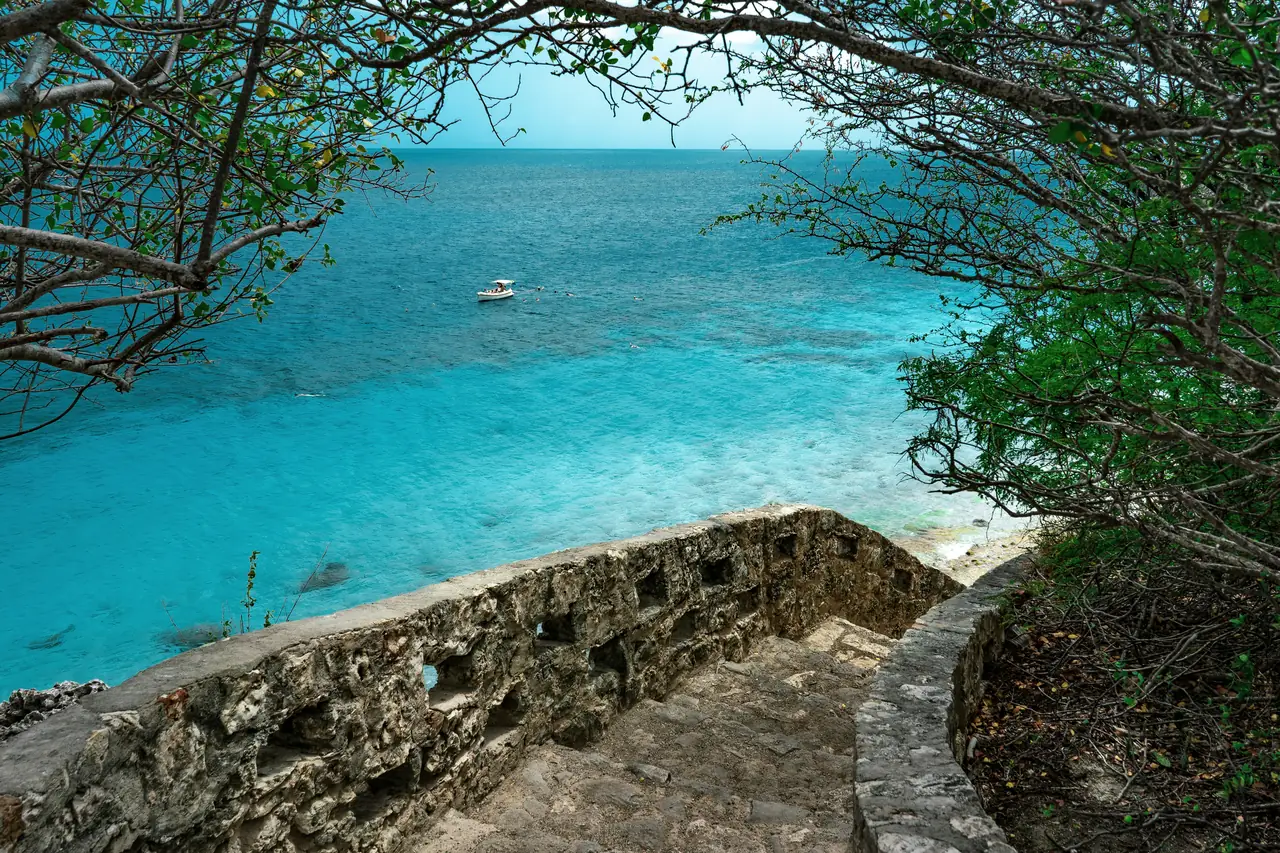
For snorkelers, the shallow reef at 1000 Steps and the entry right near the resort are both excellent. You don't need dive certification to see something remarkable. Turtles, eagle rays, and parrotfish are regular sightings in waist-deep water.
Important: the STINAPA Nature Fee covers every water activity, not just diving. Chemical sunscreens are banned in the marine park, bring reef-safe, mineral-based sunscreen or you'll be turned away at dive shops.
Exploring Bonaire Beyond the Resort
Rent a car or truck, ideally for your whole stay. I covered nearly the entire island over the trip: the windsurfers at Jibe City and Sorobon Beach, the flamingos of the Pekelmeer Flamingo Sanctuary, the 1,000 Steps, the Salt Pier, and Pink Beach. Washington-Slagbaai National Park in the north covers a third of the island and feels genuinely wild in a way that's rare in the Caribbean. Go early and bring water.
I saw the park on a day tour, and it gave me the best evening of the trip. I packed a picnic with some of the people I'd met on the tour, and we watched the sunset together at Te Amo Beach. That's the quiet gift of a group day out on an island this small: by nightfall, strangers have become company.
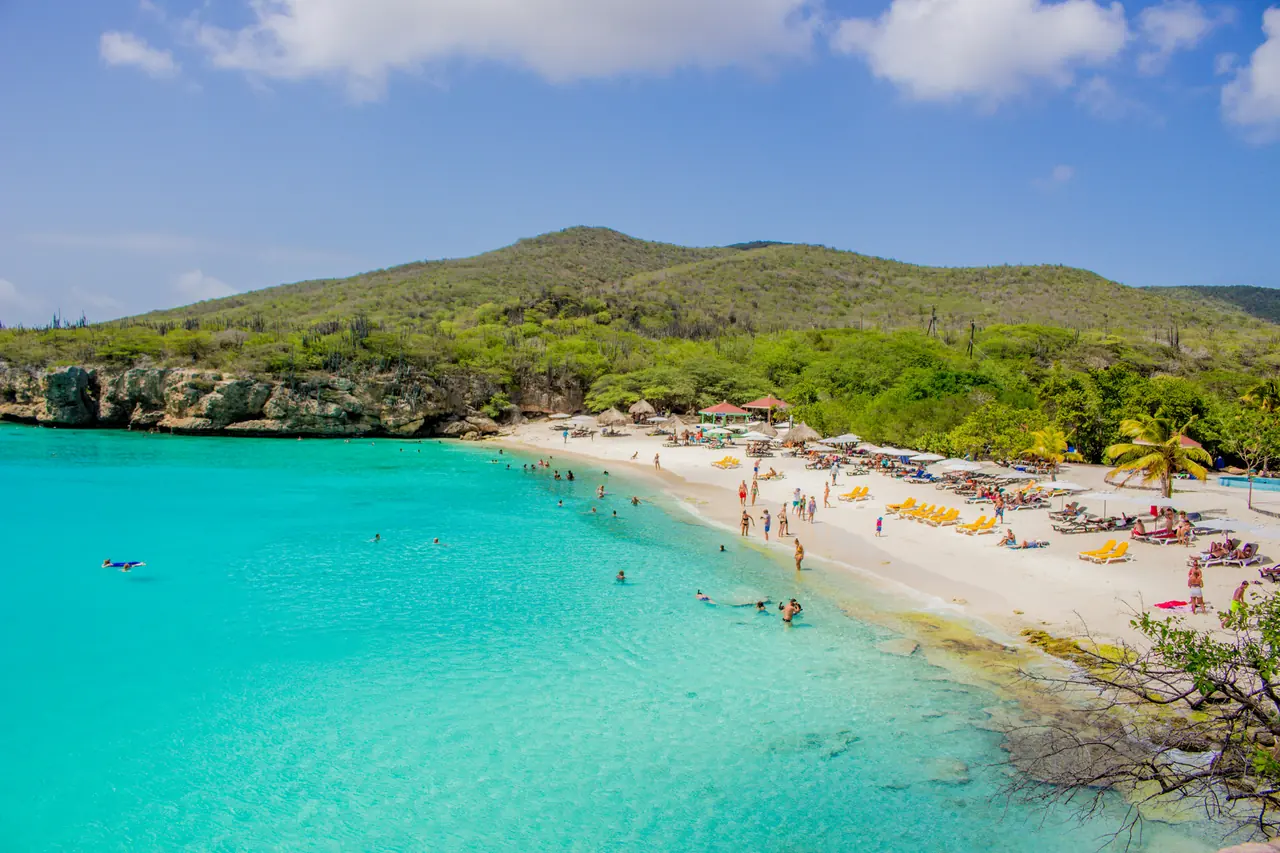
The capital Kralendijk is small and walkable: good restaurants, a few dive gear shops, a pleasant waterfront at dusk. For dinner, local spots serving fresh wahoo and lionfish are excellent; Bonairean restaurants often source directly from spearfishers.
If you're cooking or picnicking, the Dutch supermarkets are a pleasure in their own right, full of delicious cheeses worth working your way through.
Practical Info for Your Trip
- Best time to visit: Year-round. Bonaire sits outside the hurricane belt. July is warm with slightly more wind, ideal for experienced divers.
- Currency: US Dollar (official since 2011). Cards accepted almost everywhere.
- Language: Papiamentu locally; Dutch and English widely spoken.
- Getting there: Direct flights from Miami, New York (JFK), and Amsterdam to Flamingo Airport (BON). About 4 hours from NYC.
- Visa: No visa required for US or EU passport holders for stays under 90 days.
- Getting around: Rent a car or truck, no meaningful public transport.
- Solo safety rating: Very high. One of the most low-hassle solo travel environments in the Caribbean.
Final Thoughts
Bonaire rewards the traveler who isn't looking for a scene, who'd rather be underwater at 7am than at a beach club at sunset. Delfins is a comfortable base, the diving is world-class, and the pace of the island is what solo travel should feel like: slow, intentional, and entirely yours.
Where to go next
What the official advice says
Bonaire, Level 1: Exercise normal precautions
Source: U.S. Department of State, issued August 2024. Checked 16 August 2026. Advisory levels change, so check the source before you book.
Common questions
What fees do I have to pay to visit Bonaire?
Two, and they are separate. The Visitor Entry Tax is paid per person, by card only, no cash. The STINAPA Nature Fee is required of anyone entering the sea at all, not just divers. Check the current amounts before you go and budget for both before any diving costs.
When does the Bonaire Nature Fee expire?
It has run by calendar year rather than for twelve months from purchase, so buying late in the year gets you only a short window, and a trip that crosses New Year can mean paying twice. Check STINAPA's current rules when you buy.
Is Bonaire safe for solo travelers?
Bonaire has long sat at the lowest US advisory level. Theft from parked vehicles at dive sites is the realistic concern, so leave nothing inside. The more serious risk is in the water: shore diving means walking in from the road with no boat overhead, so dive with a buddy rather than alone.
Does my travel insurance cover diving in Bonaire?
Check, because standard policies routinely exclude it. Bonaire does have a hyperbaric recompression chamber on the island and its own hospital in Kralendijk, which is better than most dive destinations manage, but chamber treatment is expensive and you do not want that conversation uninsured.