Corn Islands Travel Guide: Getting There, and Going Alone
Nicaragua's most remote Caribbean destination: off-grid, beautiful, and far easier to reach solo than its reputation suggests.
Quick facts
- Region
- Caribbean Coast, Nicaragua
- Best months
- Feb–April or Dec–Jan
- Typical temperature
- ~28°C / 82°F
- Getting There
- Small plane to Big Corn, boat to Little Corn
- Budget
- Very budget-friendly
- Solo Safety
- Good on the islands
- Best For
- Diving (pristine reefs)
- Key Tip
- No ATMs on Little Corn, bring cash
My trip
- Visited
- January 2020
- Length
- A week to ten days
- Stayed
- Hotel Arenas Beach, Big Corn & Yemaya, Little Corn
- Got around by
- Small plane to Big Corn; boats to Little Corn; on foot
- Travel style
- Very budget-friendly
The Corn Islands ask a little more of you than most of the Caribbean, and give back far more. A small plane got me to Big Corn; reaching Little Corn turned into an adventure of its own. I split my time between Hotel Arenas Beach on Big Corn Island and Yemaya on Little Corn.
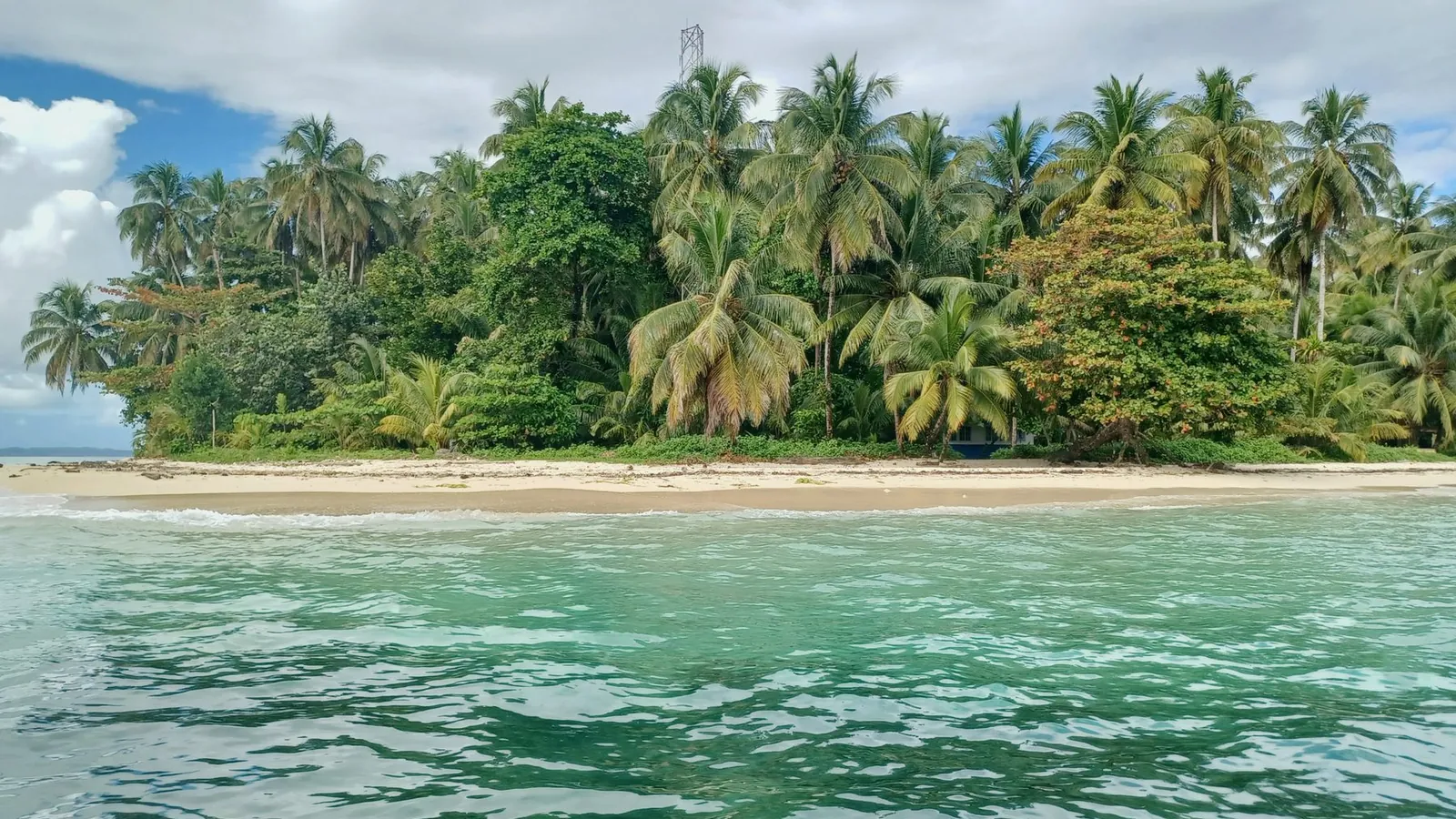
The Corn Islands are not easy to get to. They're off the Caribbean coast of Nicaragua, require either a small plane or a long bus-and-boat combo to reach, and have almost no cell signal on the smaller island. That's exactly the point. When I arrived in January, I found some of the most undeveloped, genuinely peaceful Caribbean beaches I've ever seen, and a solo travel environment that was surprisingly welcoming and safe.
Is Nicaragua Safe for Solo Travelers?
This is the most serious advisory attached to any destination on this site, and it isn't about street crime, so read this section before you book anything.
The US State Department rates Nicaragua at Level 3, Reconsider travel (as of May 2026), and the reasons it has given are arbitrary enforcement of laws, the risk of wrongful detention, and limited healthcare availability, with crime a lower concern.
That framing is unusual and it matters. Most serious ratings in this region are crime stories. Nicaragua's has been a governance story: the advisory has described the government targeting individuals and organisations for political purposes (naming NGO workers, academics and students, business representatives, civil society leaders, religious and charity workers including foreign missionaries, and journalists) and subjecting US citizens to arbitrary entry and exit bans, expulsions, arrests and revocations of citizenship. Read the current version in full before you book.
The practical implication for a traveller is different in kind from "watch your bag." The risk isn't that something is stolen from you. It's that entry or exit could be refused at official discretion, and that the usual assumption of consular help is weaker than you'd expect. If your work or affiliation touches any of the categories above (including journalism, academic research or church-affiliated volunteering) think carefully, and read the advisory in full rather than this summary of it.
Healthcare is the other listed reason. Facilities are limited, and anything complex means evacuation to Costa Rica or Honduras. On the Corn Islands, which are a flight or a long boat ride from the mainland, that chain gets longer again. Travel insurance with medical evacuation cover is genuinely necessary rather than a box to tick.
Money. International cards work unevenly and ATM networks are unreliable. Bring more cash than you think you need, particularly for the islands, where withdrawing is harder still.
None of this describes the Corn Islands themselves, which are remote, tourism-dependent and small enough that strangers get noticed and looked after. Day to day the islands are easy and friendly. The risks above are national and structural, and they follow you onto the boat.
On the islands: don't walk the beaches alone after dark, secure valuables, and use ordinary judgment. Check the current advisory close to your departure date.
Big Corn vs. Little Corn: Which Island Is Right for You?
Big Corn Island is where you fly in. It has an airstrip, more infrastructure, a few hotels with electricity and WiFi, and a small town with restaurants and shops. It's the more convenient base and better for travelers who want creature comforts alongside the remote feel.
Little Corn Island is reached by a 30-minute panga (small boat) ride from Big Corn, and it's a different world. No roads, no cars, no ATMs. You walk everywhere on sandy paths through the jungle. Electricity runs on generators, which means evenings go quiet around 10pm. If you can tolerate truly off-grid, Little Corn is worth it. If you need reliable WiFi or air conditioning, stay on Big Corn.
Practical note: The panga crossing can be rough. Waves can be significant. Dry bags are essential. The boat runs twice daily; check times locally as they shift with weather.
Getting There: The Part That Needs Real Planning
The Corn Islands are hard to reach and that is most of why they're still worth reaching. But the logistics have failure points, and a solo traveller absorbs all of them alone.
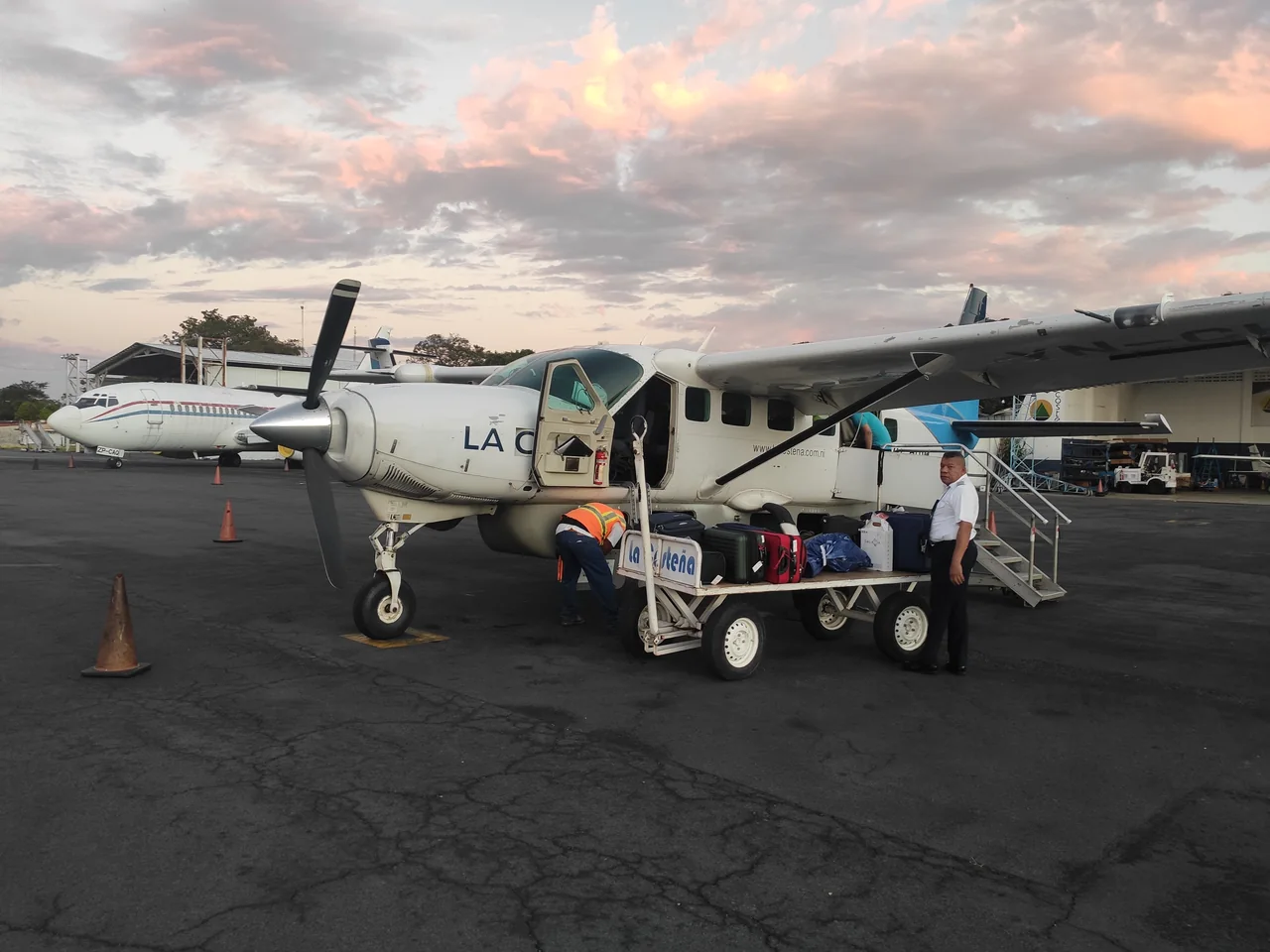
Only Big Corn has an airport. Small planes fly in from Managua, taking about an hour and a half, sometimes with a brief stop in Bluefields, and booking by phone or in person has often been cheaper than booking online.
The baggage limit is the thing people don't expect. These are small twin-prop aircraft and allowances are strict, around 13kg checked and 5kg carry-on by most accounts, with excess charged by the pound, and overweight bags occasionally left behind to travel standby. Pack accordingly. There's also a small airport tax paid at check-in.
Little Corn has no airport and no cars. You reach it by panga, an open boat, from Big Corn. Pangas run a couple of times a day in each direction, timed loosely around the flights, and the crossing takes about 30 minutes. In rough weather they don't run at all.
When the sea is rough, everything changes. A larger, slower boat runs instead at roughly double the price and around an hour, and in genuinely bad weather crossings are suspended altogether. Bring a dry bag for anything electronic; you will get wet on the panga regardless, and passengers are typically handed a tarp to hold over themselves.
Three pieces of planning advice that will save you a day:
- Check the last panga before you book your flight. If you land on Big Corn after it's gone, you're staying on Big Corn that night, wanted or not.
- Put Little Corn at the start of your trip, not the end. If weather strands you, you lose a beach day rather than an international flight.
- Build a buffer day before any onward flight out of Managua. Between weather cancellations and small aircraft, this route breaks more often than a Caribbean island route usually does.
Schedules shift by season and by boat operator, and published times are frequently out of date, confirm locally on arrival rather than trusting anything written in advance, including this.
Money before you fly. There is one ATM on Big Corn and none at all on Little Corn. Bring enough cash for your whole stay plus the crossing back, in small denominations. Running short on Little Corn is a genuine problem rather than an inconvenience.
The Crossing I Won't Forget
The plan was simple: a small plane to Big Corn, then a panga to Little Corn. The weather had other ideas. When I reached the marina, the pangas weren't running; the wind was too strong. A handful of us stood around, not really knowing what to do, until someone told us to approach a fisherman's boat that was heading to Little Corn regardless. It was a bigger boat, and not everyone who had been waiting chose to sign up.
We had an hour before it left. I went to the store and bought a big bottle of rum, because I had a fair idea how rough the water would be, and we passed the hour at the bar, buying drinks and working our way through it. I won't pretend otherwise: I was pretty tipsy by the time we boarded. The crossing was brutal. My companions were seasick the entire way, mostly, I noticed, the ones who hadn't been drinking. I was fine.
On the other side we scattered to our different hotels and hostels. Nobody from my hotel was waiting, as I'd expected someone would be, so I walked, along an unpaved path, and it was half the fun. There are no cars on Little Corn.
January isn't the island's best month, and the sea stayed too rough for me to get in the water. I loved lying on the beach anyway, and I could see the island's potential everywhere. The people I had met at the marina drifted by to visit, and a few times we went out to eat at the local restaurants. Little Corn was something else entirely: cockfights with kids cheering from the sidelines, little shops built into the front rooms of people's homes.
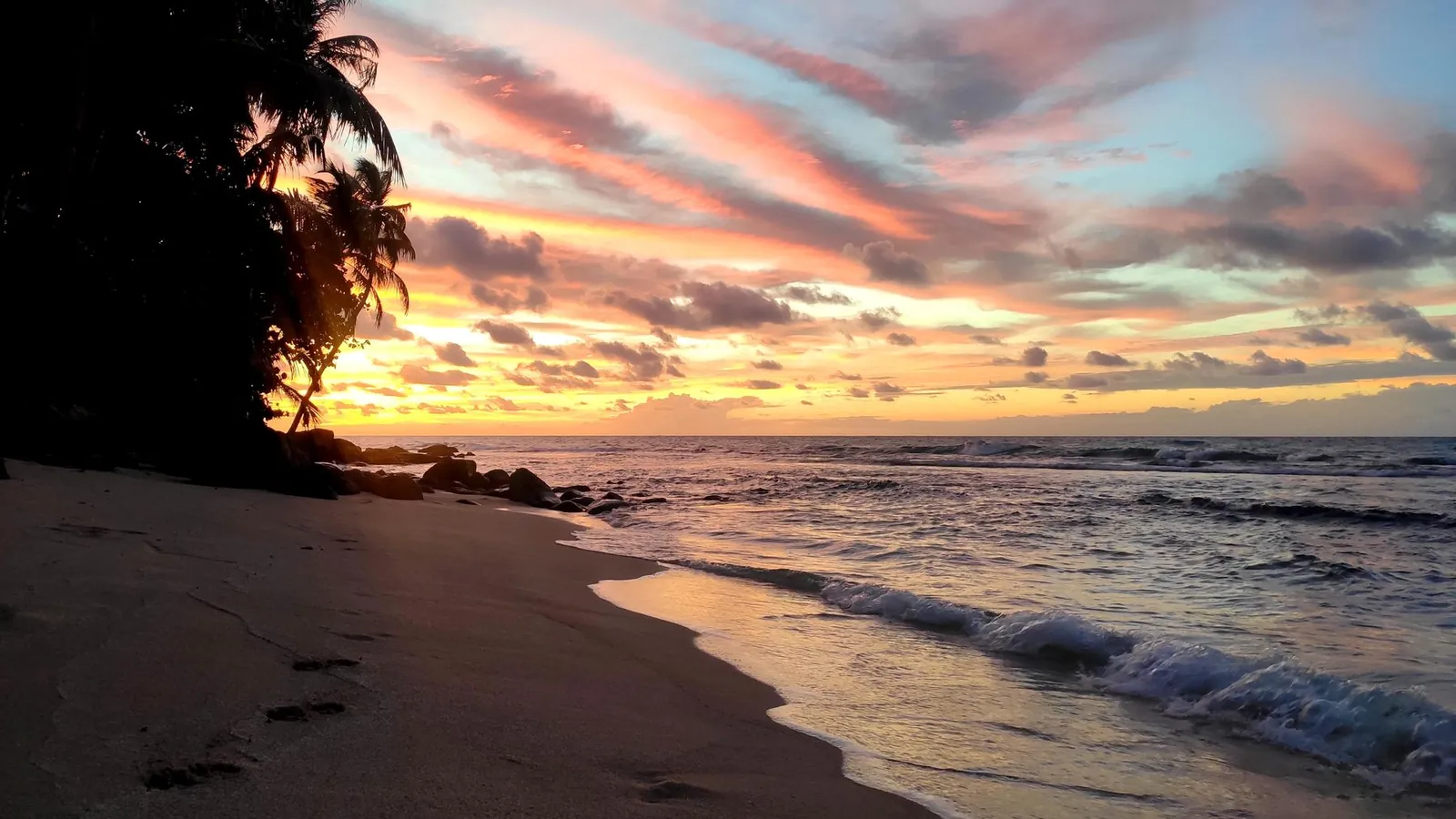
Leaving was harder than arriving. The rough water was no joke, and the pangas couldn't go until the Nicaraguan navy gave them the green light. We waited, and finally we got out. I spent my last couple of days on Big Corn, where some of the people I'd met earlier came to visit, and we watched some beautiful sunsets together.
Diving and Snorkeling
The reef around the Corn Islands is in excellent condition: Caribbean coral, nurse sharks, hawksbill turtles, and strong fish populations. Both islands have dive shops offering PADI courses and guided dives. They're small operations but experienced with solo travelers. Prices are significantly cheaper here than in Belize or the Caymans for equivalent dives.
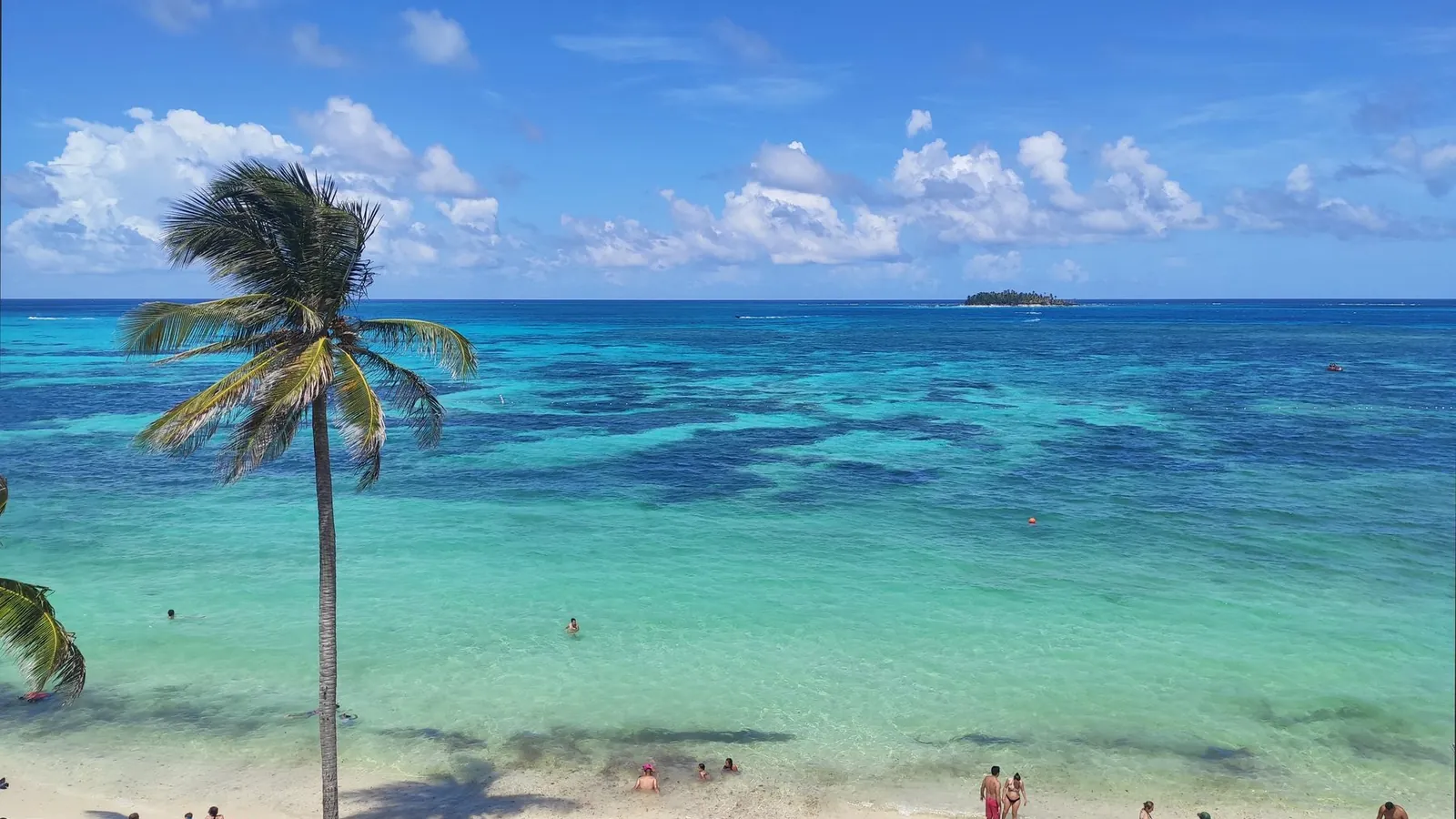
Even without diving equipment, snorkeling directly off the beaches on Little Corn's north end is excellent. The reef starts in shallow water just a few meters from shore.
Where to Stay on the Corn Islands
My stays: Hotel Arenas Beach on Big Corn Island and Yemaya on Little Corn, split across the trip.
Accommodation is simple across both islands. Don't expect boutique hotels or reliable air conditioning. On Big Corn, there are a handful of small hotels and guesthouses with simple, affordable private rooms. On Little Corn, accommodation ranges from rustic beachfront cabins to slightly nicer eco-lodges. Most run by expats or local families. Casa Iguana is the most well-known option on Little Corn, sitting on the windward side with a stunning view. Book ahead in January. Capacity is small.
January on the Corn Islands: What to Expect
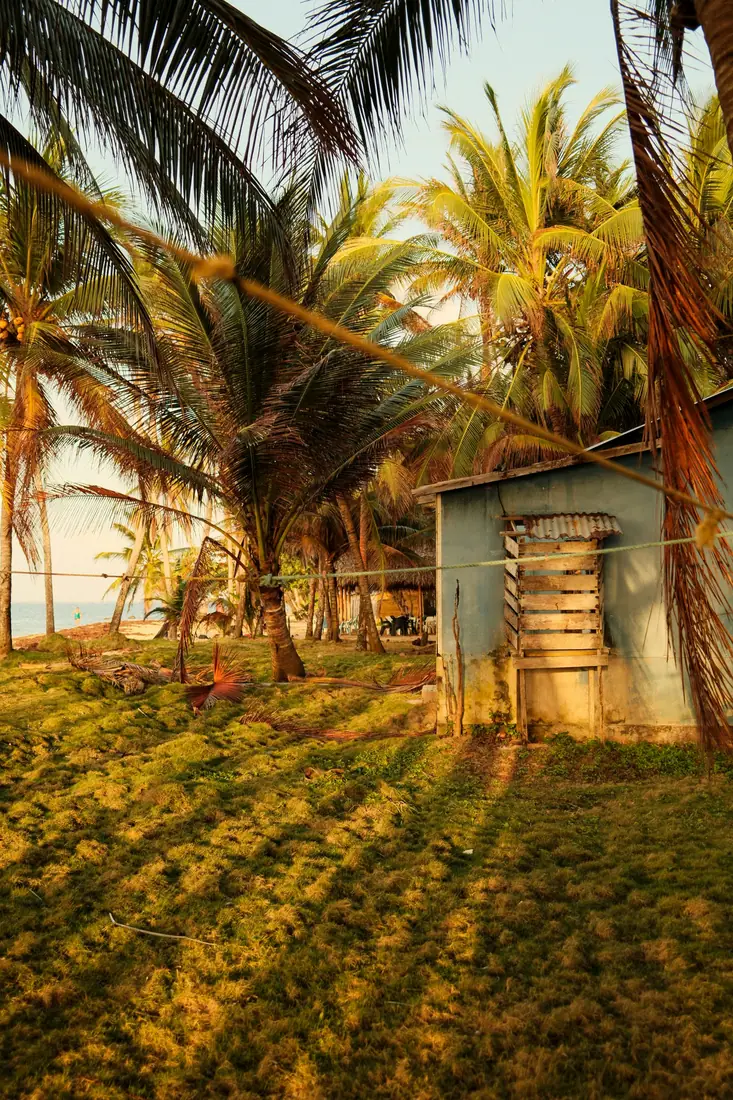
January is dry season on paper, and the trade winds keep temperatures comfortable and the bugs down. In practice, those same winds can make the sea too rough to swim and stop the boats entirely, which is exactly what happened on my trip. It's low season for international tourists (though some Nicaraguan domestic tourism picks up around New Year), so beaches are quieter and prices lower. Build slack into your plans.
Practical Info for Your Trip
- Getting there: Fly Managua (MGA) → Big Corn Island (RNI) on La Costeña airlines (about 1.5 hours). Alternatively: bus from Managua to El Rama (8–10 hours), then boat to Bluefields, then another boat or flight to Big Corn. The bus-boat route is an adventure in itself, not for everyone.
- Currency: Nicaraguan Córdoba (NIO). USD accepted informally on the islands but less reliably than on the mainland. Bring cash. There's one ATM on Big Corn and none on Little Corn.
- Language: Spanish on Big Corn; English Creole is the dominant language on Little Corn among locals.
- What to pack: Cash (enough for your stay), offline maps, a dry bag, insect repellent, reef-safe sunscreen, a headlamp for Little Corn evenings, and anything you definitely need. Resupply options are minimal.
- Solo safety rating: Good on both islands during the day. Apply standard off-grid travel caution at night.
Final Thoughts
The Corn Islands are the kind of destination that divides people. Some find the lack of infrastructure frustrating, others find it exactly the point. If you're the kind of solo traveler who wants to genuinely disappear for a week (no Instagram, no agenda, no noise) Little Corn Island delivers something rare. I left without ever getting in the water, already picturing the island in a calmer month.
Where to go next
- Bocas del Toro, a similar Caribbean archipelago with a far easier advisory.
- Tamarindo, the easier neighbour, if Nicaragua reads as too much.
What the official advice says
Nicaragua, Level 3: Reconsider travel (Crime, Health, Wrongful detention, Other)
Source: U.S. Department of State, issued May 2026. Checked 16 August 2026. Advisory levels change, so check the source before you book.
Common questions
Is Nicaragua safe for solo travelers?
Nicaragua's US advisory has been a serious one, but for arbitrary enforcement of laws, risk of wrongful detention and limited healthcare rather than street crime. It has described the government targeting NGO workers, academics, journalists, business figures and religious volunteers, and imposing entry and exit bans, expulsions and arrests on US citizens. That is a different category of risk from petty theft and deserves reading in full.
Are the Corn Islands safer than mainland Nicaragua?
Day to day, the islands are remote, tourism-dependent and small enough that visitors get looked out for. But advisories are issued nationally and the risks driving Nicaragua's rating are legal and governmental, not geographic, entry and exit decisions apply wherever in the country you happen to be.
Do I need travel insurance for the Corn Islands?
More than almost anywhere else in this region. Limited healthcare has been one of the stated reasons behind Nicaragua's advisory, complex cases require evacuation to Costa Rica or Honduras, and the islands add a flight or a long boat ride to the start of that chain. Make sure medical evacuation is explicitly covered.
Can I use cards and ATMs on the Corn Islands?
Unreliably. International cards work patchily across Nicaragua and ATM networks suffer outages, and the islands are the worst place to discover this. Bring substantially more cash than you expect to spend.