Cancún Solo Travel: Is It Safe, and What to Do Alone
Cancún's reputation comes from spring break coverage. Step outside the Hotel Zone and it's a different, much better trip.
Quick facts
- Region
- Yucatán Peninsula, Mexico
- Best Month to Visit
- December–April (dry season)
- Typical temperature
- ~30°C / 86°F
- Airport
- Cancún International (CUN)
- Budget
- Mid-range to luxury
- Solo safety
- Good in Hotel Zone
- Top Day Trip
- Chichén Itzá ruins
- Best Beach
- Playa Norte, Isla Mujeres
- Sargassum Risk
- Moderate Apr–Oct
My trip
- Visited
- May 2023
- Length
- About a month
- Stayed
- Airbnb at Ocean Dream, Hotel Zone
- Got around by
- ADO airport bus; R1/R2 buses + DiDi
- Travel style
- Mid-range to luxury
Cancún lived in for a month is a very different place from Cancún on a long weekend. I worked remotely from an Airbnb at Ocean Dream in the Hotel Zone, swam on my lunch breaks, rode the R1 and R2 buses downtown to the markets, and welcomed friends and family as they flew in to visit.
Cancún is worth more than its spring break reputation suggests. Yes, the Hotel Zone is a strip of international resorts and beach clubs that could be anywhere, but it's also a comfortable, safe, and convenient base for exploring some of the most remarkable ancient history and natural landscapes in the Americas. Stay long enough and it reveals itself as an easy place to live, and a launch point for everything worth seeing nearby.
Short answer: Cancún alone is easier than its reputation suggests. The Hotel Zone and downtown are both fine with normal caution, and the R1 bus makes a rental car unnecessary. The reason to come isn't Cancún itself but what's within reach of it: the cenotes, Chichén Itzá and Isla Mujeres.
Is Cancún Safe for Solo Travelers?
Start with the thing most guides get wrong: Cancún is not in the Yucatán. It is in Quintana Roo, a different state with a different risk rating, and the distinction matters because the US State Department rates Mexico state by state rather than as one country.
Mexico is rated state by state, and the line between states matters. Quintana Roo is rated Level 2, Exercise increased caution (as of May 2026); neighbouring Yucatán state, an hour's drive west, is Level 1, Exercise normal precautions (as of May 2026). Same peninsula, same beaches on the brochure, and not necessarily the same tier.
The Quintana Roo entry in the advisory is specific, and it is worth reading rather than paraphrasing away. It has warned that shootings between rival gangs have injured and killed bystanders, and that US citizens have been victims of both violent and non-violent crime in tourist and non-tourist areas alike, not only downtown. Its practical instruction is to pay attention to your surroundings after dark and stay on well-lit pedestrian streets and in tourist zones.
That is a meaningfully different picture from "the Hotel Zone is safe, downtown isn't," which is what most Cancún guides tell you. The Hotel Zone is heavily policed and the overwhelming majority of trips are uneventful. It is not a sealed bubble.
Three things from the advisory that apply directly to travelling alone:
- Don't hail taxis on the street. US government employees in Mexico are required to use dispatched vehicles from regulated taxi stands (sitios) or apps like Uber and Cabify, and the State Department advises US citizens to follow the same rule. This is a stricter standard than most blogs suggest.
- Watch your drink. The advisory states plainly that sexual assault occurs in resort areas, particularly at night and early morning, and that drinks are sometimes spiked. Uncomfortable to read on a beach-holiday page, and the reason it belongs on one.
- Carbon monoxide. US citizens have died of carbon monoxide poisoning in Mexican hotels and rentals, many of which have no detector. A portable detector is a genuinely reasonable thing to pack.
Quintana Roo runs a free Guest Assist app with emergency numbers, legal advice and help filing police reports. Mexico's tourist assistance line is 078; emergencies are 911. Check the current advisory before you book. The level is revised through the year.
A Month in the Hotel Zone
Most people give Cancún a long weekend. I gave it a month, and it settled into an easy rhythm. Weekdays were for work, broken up by lunch hours spent tanning and quick swims in the ocean. When friends and family came to visit, the evenings stretched out and we had a blast.
Across the street from where I stayed is Mayan Monkey, a hostel with a strong lineup of events that you don't need to be a guest to attend. The DJs play genuinely great music, and it's one of the easiest places in the Hotel Zone to drop in on your own.
I skipped Coco Bongo and went downtown to the markets instead, Mercado 23 and Mercado 28. Of the two, 23 won me over: more local, more authentic, and far less staged for visitors.
The R1 and R2 buses run the length of the Hotel Zone and into downtown, and for everything else I used DiDi rather than Uber because it was cheaper. From the airport, the ADO bus runs to the Hotel Zone, quick and hassle-free.
Day Trip to Chichén Itzá
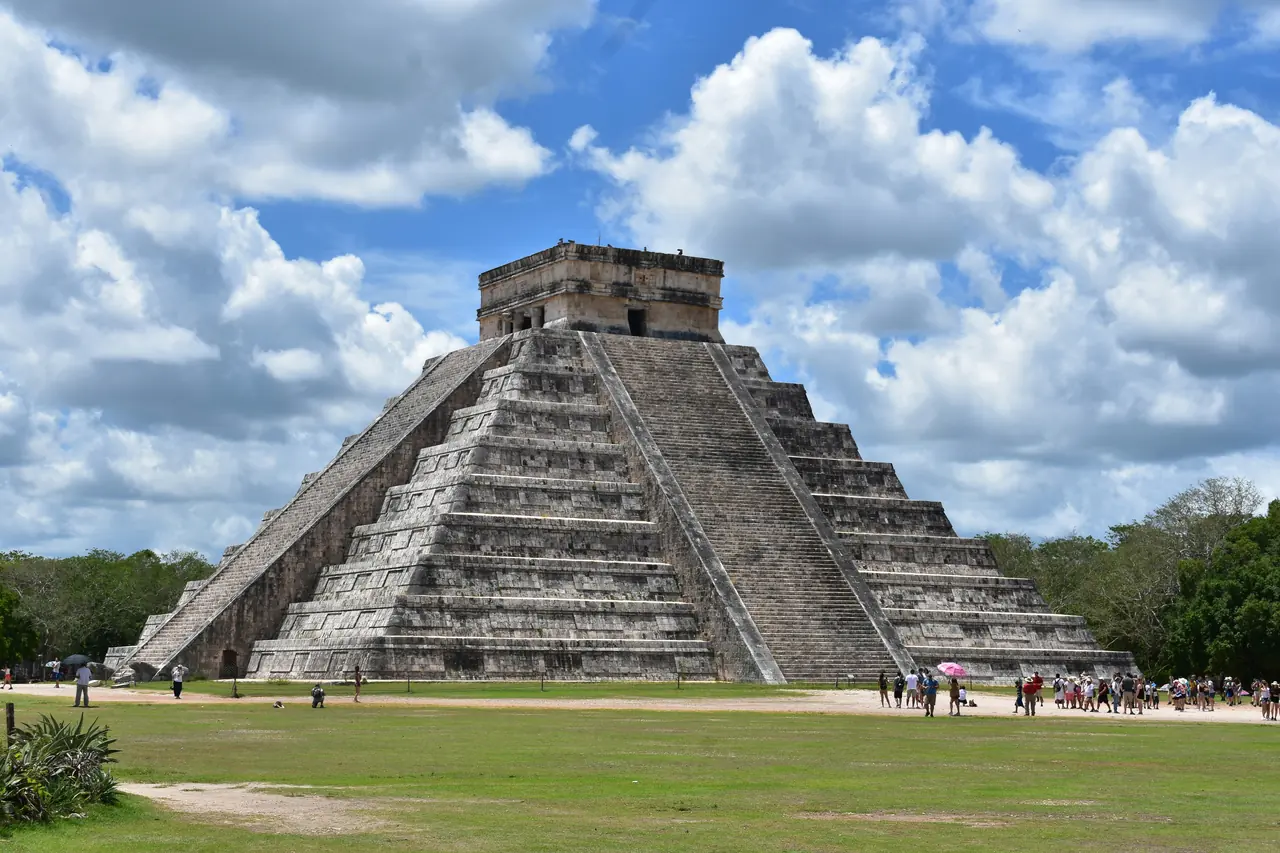
Chichén Itzá is a 2.5-hour drive from Cancún and one of the most significant Mayan archaeological sites in the world. The main pyramid, El Castillo, is precisely aligned with the sun at the spring and autumn equinoxes, a feat of astronomical engineering that becomes more impressive the more you learn about it. Go with an organized day tour (easier than renting a car) or hire a driver. Arrive at opening time (8am) before tour buses arrive and before the midday heat becomes brutal. April is close to the equinox, which means the site is busier, so book your tour in advance.
Cenotes: Swimming in Underground Water
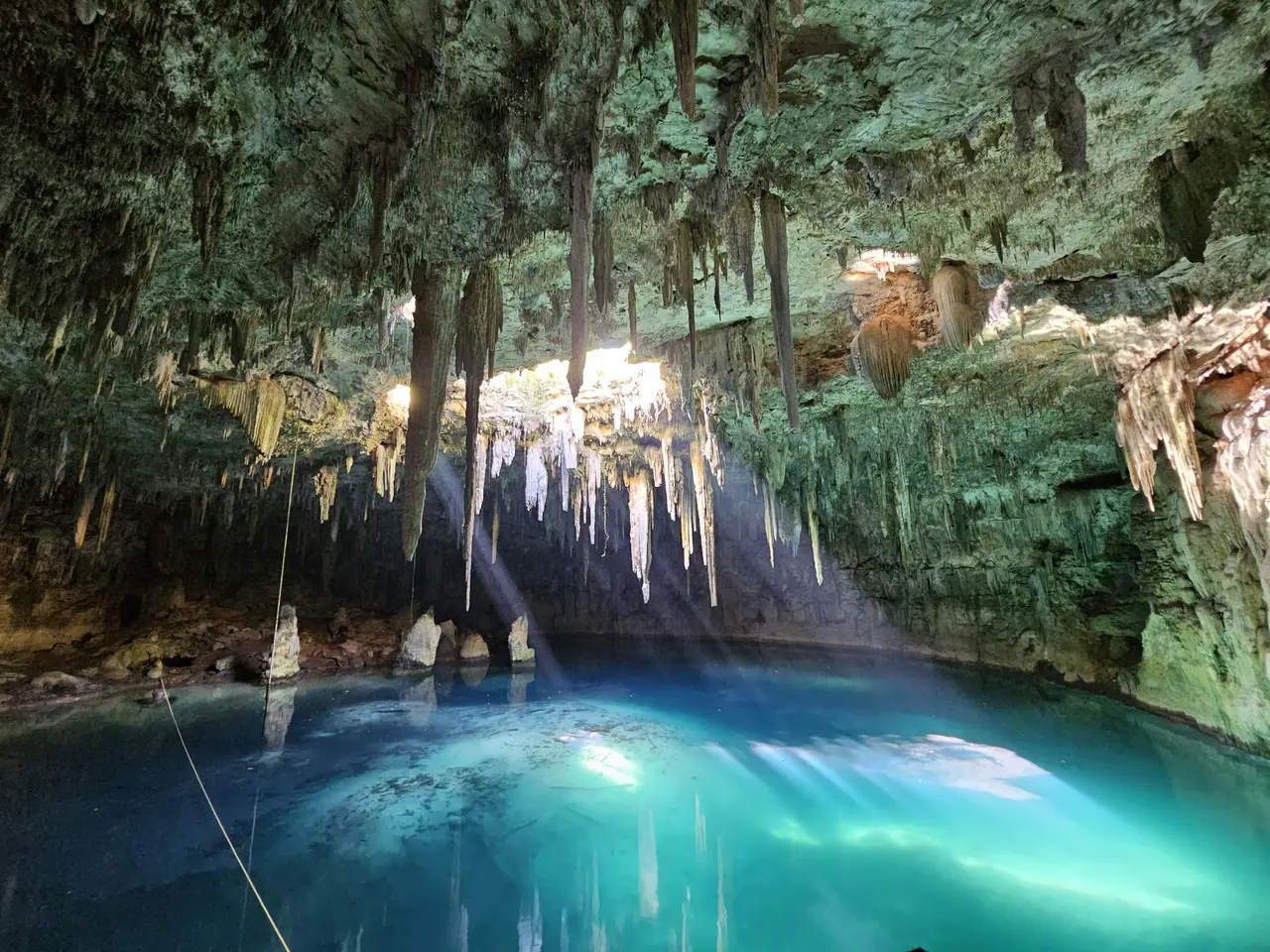
The Yucatán Peninsula sits on a network of underground rivers connected by cenotes, natural sinkholes that reveal pools of crystal-clear freshwater. Swimming in them is one of the most extraordinary physical experiences in Mexico. The most accessible from Cancún include Ik Kil (near Chichén Itzá, touristy but beautiful), Gran Cenote near Tulum (excellent snorkeling), and the Cenote Route near Valladolid (less crowded). Most organized day trips include a cenote stop; you can also visit independently.
Isla Mujeres: The Best Day Trip from Cancún
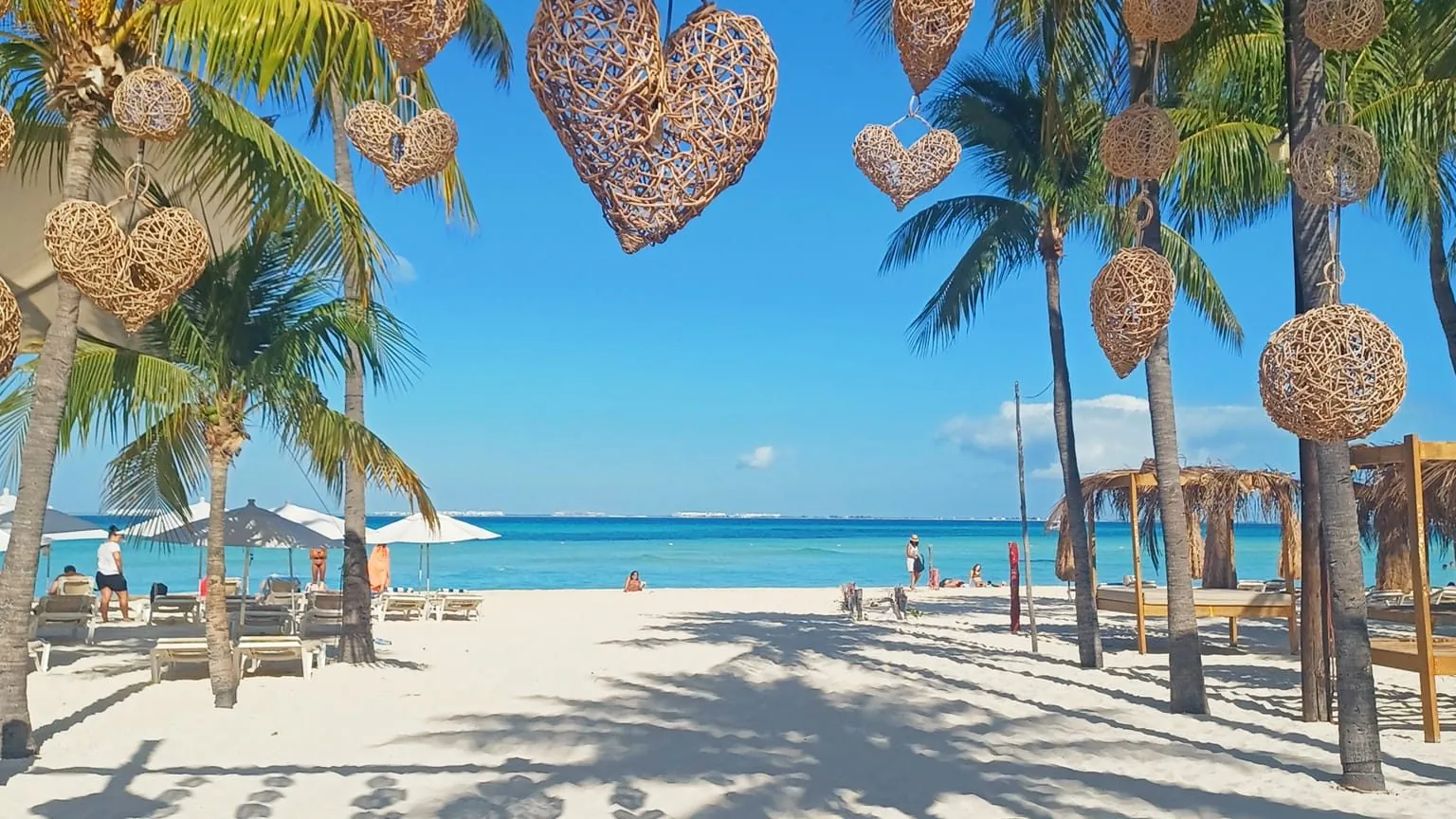
Isla Mujeres is a small island off Cancún with a completely different pace: golf carts instead of cars, good seafood along the main street, and Playa Norte, which is genuinely one of the most beautiful beaches in Mexico. Shallow, calm, west-facing, and warm enough to stand in for an hour. As a solo traveller it's easy and unintimidating: everything is walkable from the pier and you're never far from other people.
I went over on a weekend by catamaran, which turns the crossing into part of the day.
Which ferry you take matters more than anything else about this day trip, and it's where most Hotel Zone visitors get it wrong.
There are four departure points, and they are not equivalent:
- Puerto Juárez (also signed as Gran Puerto), just north of downtown Cancún: the fastest crossing at 15 to 20 minutes, departures roughly every 30 minutes from around 5:30am until late evening, and the cheapest fare by a wide margin.
- Playa Tortugas (Km 6.5) and Playa Caracol (Km 9.5) in the Hotel Zone: 25 to 30 minutes, far fewer sailings, and noticeably higher fares than Puerto Juárez.
Every ferry docks at the same pier on Isla Mujeres, steps from the golf cart rentals and a short walk from Playa Norte. You are paying the Hotel Zone premium purely for not travelling to Puerto Juárez first, and an Uber to Puerto Juárez costs a fraction of the difference.
The part that actually catches people out is the last boat back. Hotel Zone sailings thin out and finish in the late afternoon. Playa Tortugas' final departure is around 5:15pm. Puerto Juárez runs until late evening. If you go out from the Hotel Zone and lose track of time over lunch, you can miss your return and find the pier closed.
The fix is simple and worth knowing before you go: you don't have to come back the way you went. Take a late Puerto Juárez ferry and an Uber back down the Hotel Zone. It costs less than the Hotel Zone round trip would have, and it buys you the whole afternoon and sunset on the island rather than watching the clock from 4pm.
Two other things: bicycles travel free but there's no car deck on the passenger ferries, and Ultramar tickets stay valid for six months, so an unused return isn't wasted.
Eating Away from the Resort Buffets
The Hotel Zone does a good job of keeping you fed without ever leaving your resort, which is exactly the problem. La Parrilla, on the Hotel Zone boulevard, is a reliable sit-down option with live mariachi if you want a proper Mexican dinner without leaving the strip. For something more local, downtown Cancún (a short bus or taxi ride from the Hotel Zone) has considerably better and cheaper food; it's worth at least one evening away from the resorts for that alone. ICAZA Cocina de Herencia, on Avenida Tulum, is a good breakfast or brunch stop if you're downtown in the morning.
Practical Info for Your Trip
- Best time to visit: December through April (dry season). April is warm (30°C/86°F) with little rain. Avoid May–October for heat and hurricane risk.
- Where to stay: Hotel Zone for convenience and safety. Budget options exist in downtown Cancún but require more awareness.
- Getting around: R-1 bus runs the length of the Hotel Zone cheaply. Uber is available and reliable. Avoid unofficial taxis at night.
- Currency: Mexican Peso (MXN). USD accepted in the Hotel Zone but at poor rates, pay in pesos when possible.
- Solo safety rating: Good in Hotel Zone. Apply standard awareness outside it.
Where to go next
- Holbox, three hours north and the antidote to the Hotel Zone.
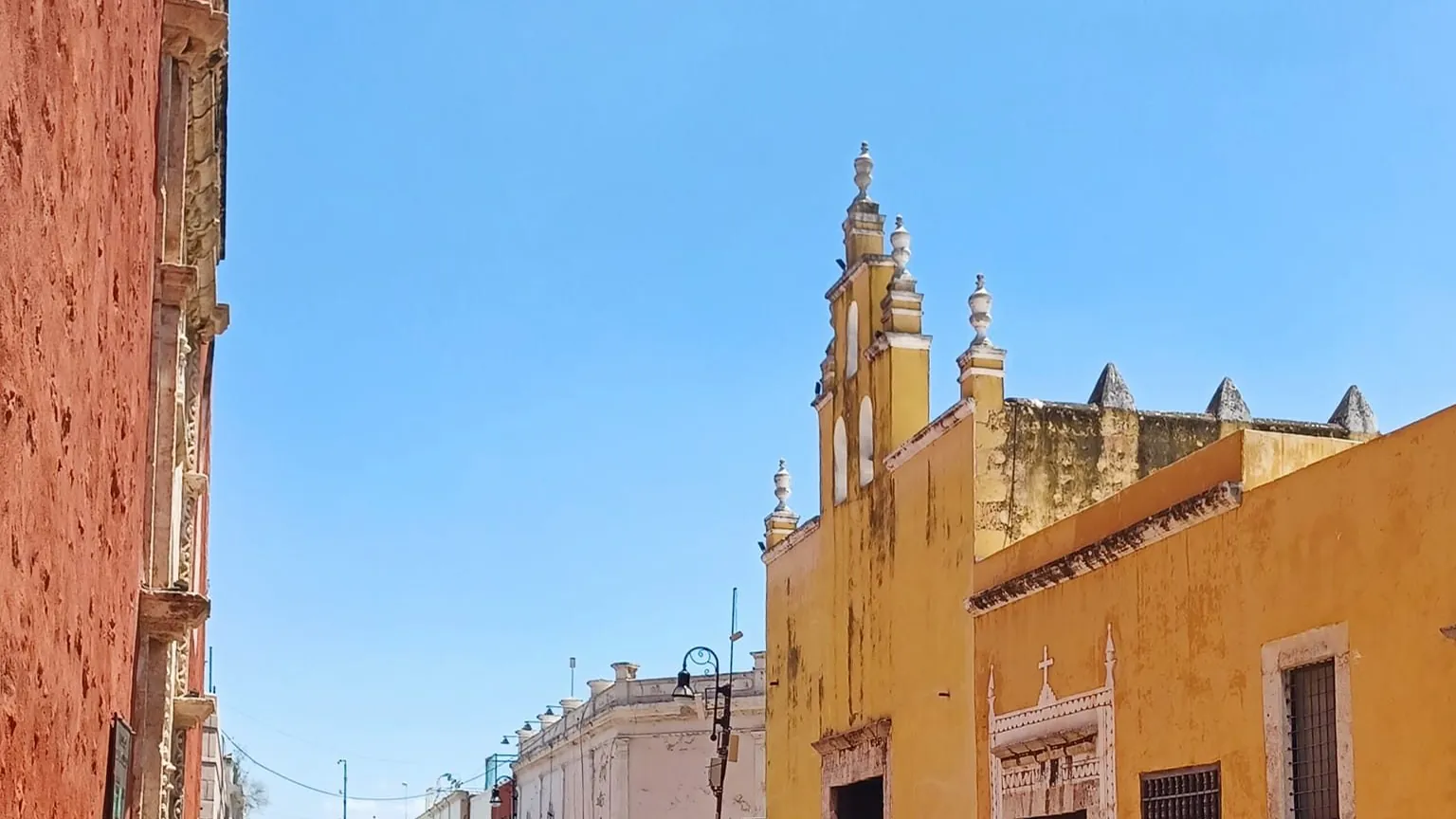
- Mérida, the calmer alternative, inland and far more Mexican.
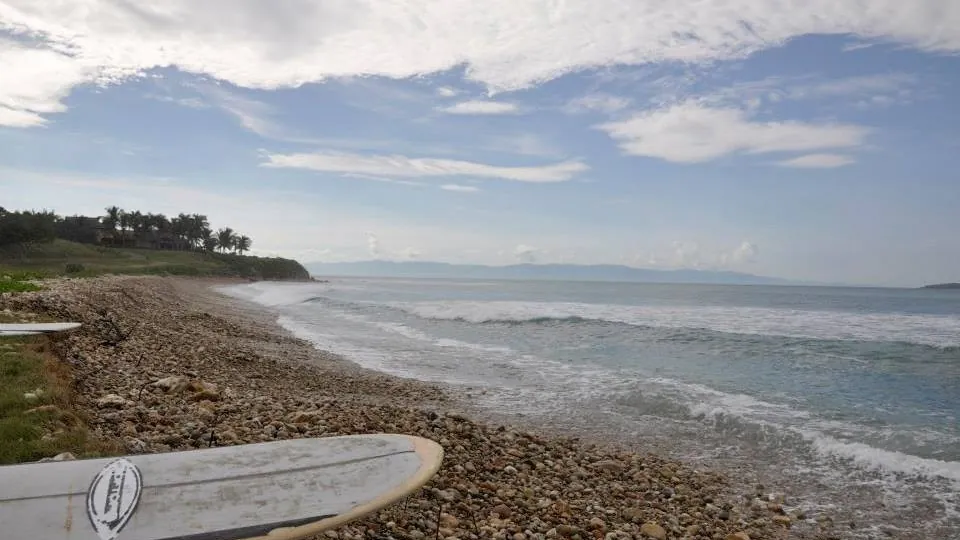
- Punta Mita, if you want Mexico on the Pacific side instead.
What the official advice says
Quintana Roo, Level 2: Exercise increased caution (Terrorism, Crime)
State notes that shootings between rival gangs have injured and killed bystanders, and advises staying in well-lit pedestrian and tourist areas after dark.
Source: U.S. Department of State, issued May 2026. Checked 16 August 2026. Advisory levels change, so check the source before you book.
Common questions
Is Cancún safe for solo travelers?
Cancún is in Quintana Roo, and Mexico's US advisory is issued state by state, so read the Quintana Roo entry. It has warned that bystanders have been hurt in gang shootings and that crime affects tourist as well as non-tourist areas, so the Hotel Zone is safer but not sealed off. Stay on lit streets after dark, and use a ride-hailing app or an authorized taxi stand rather than hailing on the street.
When is the best time to visit Cancún?
December to April is dry season and the most reliable weather. April runs warm at around 30C with little rain. May to October brings heat plus hurricane risk, which is why rates drop.
Should I pay in pesos or US dollars in Cancún?
Pesos. Dollars are accepted throughout the Hotel Zone but the exchange rate offered at the till is consistently poor, so you pay a quiet premium on every transaction. Withdraw pesos from a bank ATM instead.
Is Cancún in the Yucatán?
No, and the distinction has practical consequences. Cancún is in Quintana Roo state; Yucatán is the neighbouring state where Mérida sits. They carry separate US advisory entries, often at different levels, so the two are not interchangeable when you are assessing risk.