Solo Travel Guide to Crete, Greece
Greece's largest island and one of its best for solo travelers: good buses, cheap ferries, and a gorge walk worth planning a trip around.
Quick facts
- Region
- Crete, Greece
- Best months
- May–June or Sept
- Typical temperature
- ~28°C / 82°F
- Airport
- Heraklion (HER)
- Budget
- Mid-range
- Solo Safety
- Excellent
- Must See
- Palace of Knossos
- Best Beach
- Balos or Elafonisi
- Must Eat
- Dakos & fresh seafood
My trip
- Visited
- July 2013
- Length
- 7 nights
- Stayed
- Rental apartment, Stalos
- Got around by
- Rented jeep
- Travel style
- Mid-range
Crete is an island to explore beyond the paved road. I rented a jeep and took it onto tracks so steep they seemed to belong to the goats, and came home each night to a rental apartment in Stalos, just west of Chania, with Kosmas Taverna right around the corner.
Crete is the kind of island that keeps revealing itself. I arrived expecting beaches and left with a list of things I hadn't had time to do: ancient ruins, mountain villages, gorge hikes, wine regions. In July I found it warm, welcoming, and far more interesting than a beach holiday. The island is large enough to explore for two weeks without repeating yourself, and safe enough to do it entirely alone.
Is Crete Safe for Solo Travelers?
Yes. Crete is one of the safer Mediterranean destinations for solo travelers. The tourist areas are heavily trafficked by European visitors, locals are accustomed to independent travelers, and violent crime is extremely rare. The main things to be aware of are standard Mediterranean solo travel considerations: don't accept unsolicited rides, be assertive with persistent vendors in tourist areas, and trust your judgment about which bars and areas to frequent after dark. The overall experience is relaxed and positive.
Chania: The Most Beautiful Town on the Island
Start in Chania on the northwest coast. The old Venetian harbor (pastel buildings, a lighthouse, narrow lanes) is the most atmospheric part of Crete and perfect for solo exploration. The covered market in the city center is an excellent introduction to Cretan food: local olive oil, thyme honey, fresh cheese, and dried herbs.
Chania is very walkable and comfortable for solo dining. The Splantzia neighborhood behind the harbor has less touristy tavernas where you can eat well and cheaply. For a solo evening, the harbor front is lively enough to feel social without being overwhelming.
The Taverna Around the Corner
The best discovery of my week was Kosmas Taverna, right around the corner from my apartment in Stalos. One evening I passed by and saw something lively happening inside, so I stopped. It was a baby's christening, and I was immediately invited in to join. I hadn't expected it, and I felt a little like an intruder walking in.
I came back the next night for dinner. The food and service were extraordinary, the kind of evening you never want to end. That was true almost everywhere I ate on Crete. The island grows much of its own fruit and vegetables rather than importing them, and you can taste it in nearly every dish.
The Samaria Gorge: One of Europe's Great Hikes
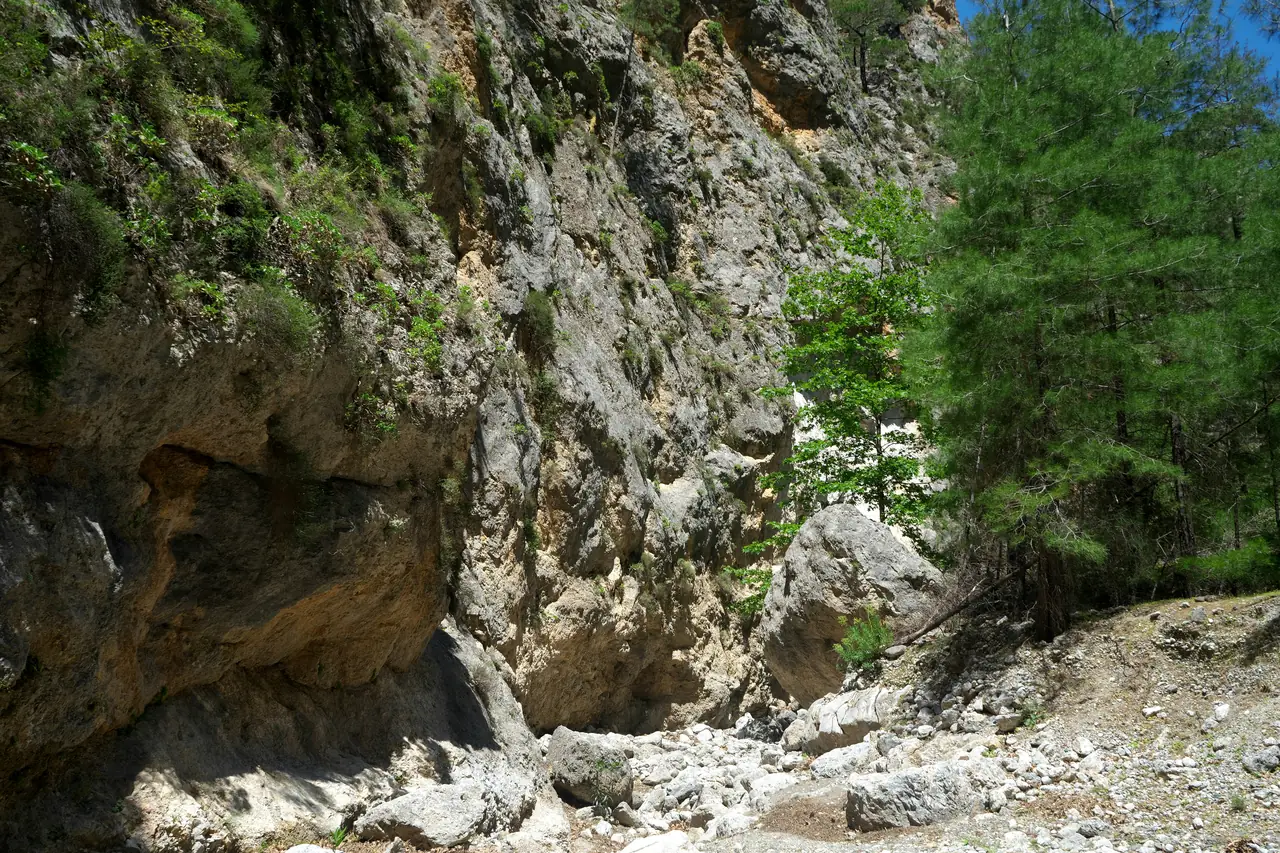
The Samaria Gorge is a 16km descent through one of Europe's longest gorges, ending at the Libyan Sea. In July it's hot. Start at first entry (7am) before the day heats up. Bring 2+ liters of water, proper shoes, and salty snacks. The hike takes 4–6 hours depending on your pace and is done solo by many travelers every day. Buses from Chania take you to the top; a ferry from Agia Roumeli brings you back to the north coast.
Beaches: Where to Go Beyond the Obvious
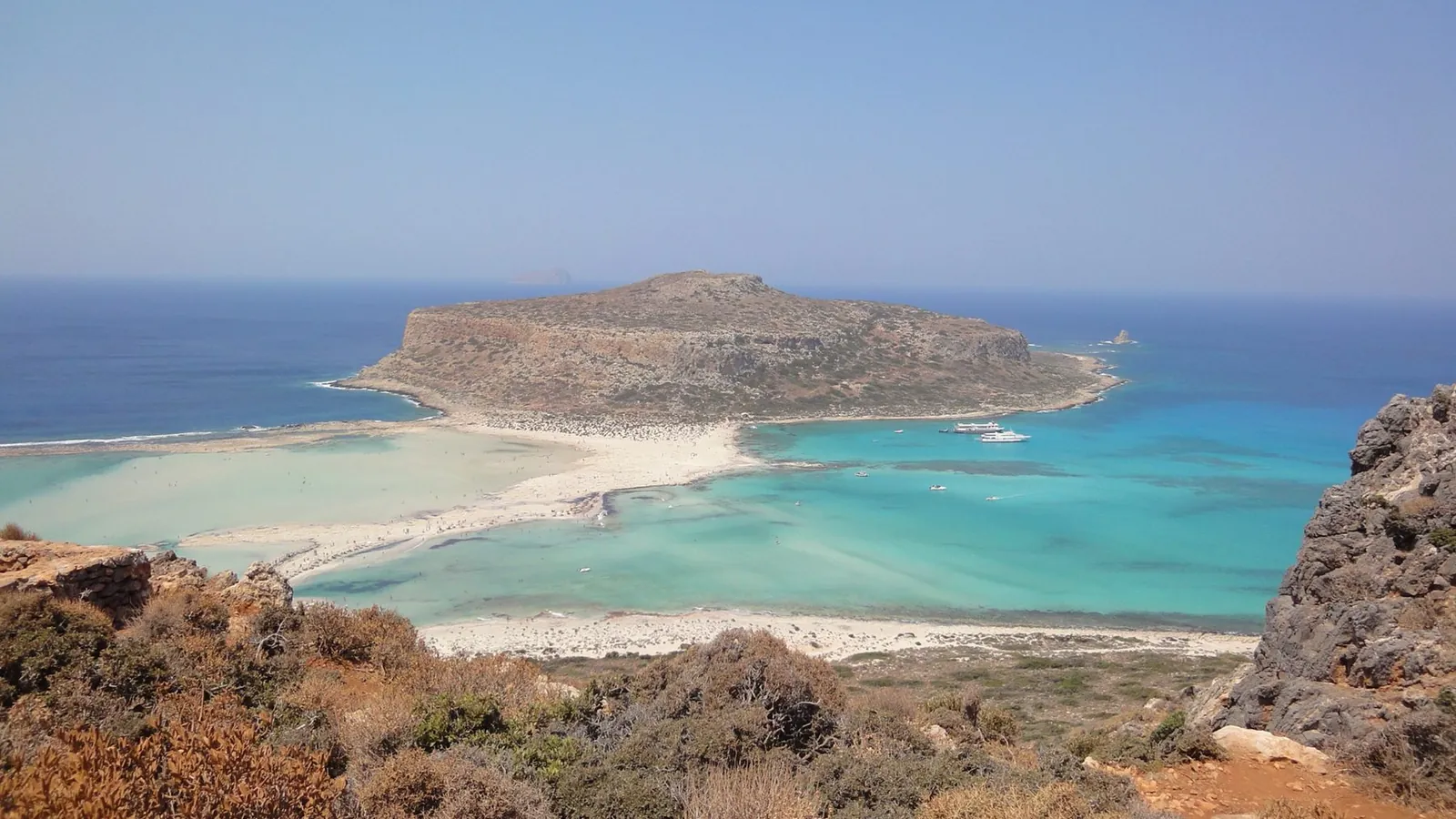
Elafonisi is the famous pink-sand beach on the southwest coast, genuinely beautiful, genuinely crowded in July. Go early or late afternoon. Balos Lagoon requires a 4x4 or a boat tour but delivers a view that justifies both. For something quieter, the beaches around Loutro (a village only accessible by boat or on foot) are dramatically beautiful and far less visited.
I made it to Pink Beach on my own trip. One warning matters more than any recommendation, though: Crete's currents are strong even when the water looks calm. I swam out too far and couldn't get back to shore. Luckily the current carried me along the coast rather than out to sea, and I came back in roughly a kilometer from where I'd entered. Swim well within your limits and stay close to shore.
Heraklion and the Palace of Knossos
Crete's capital, Heraklion, is worth a full day, and the order in which you do the two main sites matters more than most guides admit.
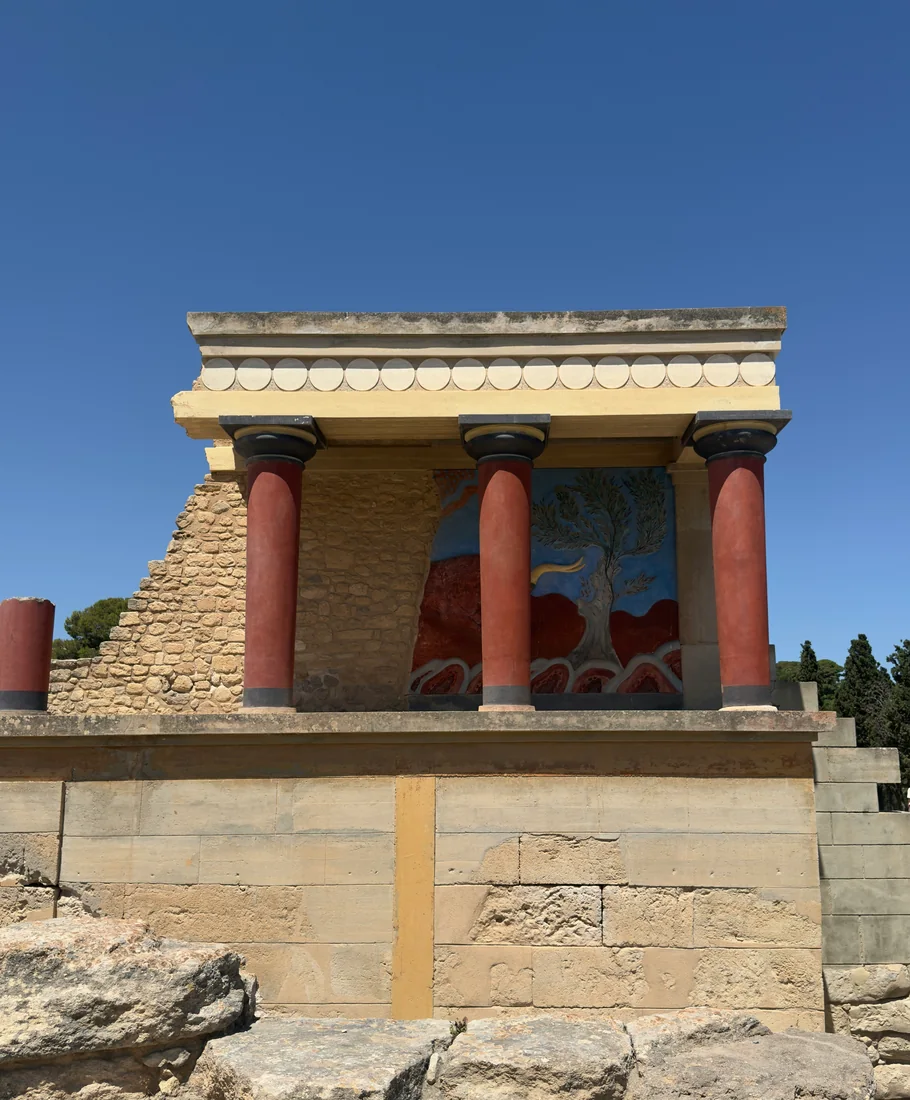
Do not do Knossos without the Heraklion Archaeological Museum. This is the single most useful thing to know here. The frescoes you see at the palace (the bull-leapers, the dolphins, the Prince of the Lilies) are replicas. The originals are in the museum, five kilometres away, along with the Linear B tablets and the bulk of what was actually excavated from the site. Doing the palace alone and skipping the museum is the most common mistake visitors make on Crete, and it leaves you with a walk round some reconstructed walls.
The combined ticket exists precisely for this and is valid three consecutive days, so the two visits don't have to be on the same day. Prices change, so buy through the official Greek Ministry of Culture e-ticketing portal rather than trusting a figure from a blog, including this one. The portal also lists the free and reduced-admission days and categories.
Timing at Knossos. Open roughly 8:00–20:00 in summer, closing around 17:00 in winter, last admission fifteen minutes before. Coach groups start arriving around 10am. Be there at opening or go after 2pm. There is almost no shade on the site: hat, water, proper shoes, because the ground is uneven and there are stairs.
Get the audio guide or a guided tour. Knossos is genuinely disorienting: it's a vast multi-storey complex of courtyards, storerooms and light wells, the English signage is thin, and without context it reads as rubble. A solo traveller doesn't need to pay for a private guide. The audio guide does the job for a fraction of it.
Getting there: city bus No. 2 from central Heraklion runs frequently and takes about 20 minutes, or a taxi is quick and inexpensive. Allow 1.5–2 hours at the palace self-guided, and half a day for both sites together.
Getting Around Crete Solo
How I got around: I rented a jeep, and I'm grateful I did, because I took it off road. On some of those tracks the incline got so steep I felt like one of the wild goats clinging to the cliff edge. If you're planning anything similar, a 4x4 is worth the extra cost.
Renting a car is the best way to see Crete properly. The island is 260km long and the most interesting places (gorges, mountain villages, remote beaches) require wheels. ATV rentals are available in tourist towns but are not recommended on Crete's mountain roads. Buses connect the main cities reliably; KTEL Chania and KTEL Heraklion cover most of the island.
Practical Info for Your Trip
- Best time to visit: May–June or September–October for fewer crowds and lower prices. July and August are peak season: hot, busy, but fully operational.
- Currency: Euro (€). Cards accepted widely; carry cash for villages and smaller tavernas.
- Language: Greek, but English is spoken extensively in tourist areas.
- Getting there: Heraklion (HER) and Chania (CHQ) both have international airports with direct connections from most European cities. From the US, connect through Athens or a major European hub.
- Solo safety rating: High. One of the most comfortable Mediterranean solo travel experiences.
What the official advice says
Greece, Level 1: Exercise normal precautions
Source: U.S. Department of State, issued October 2025. Checked 16 August 2026. Advisory levels change, so check the source before you book.
Common questions
Is Crete safe for solo travelers?
Greece sits at the lowest US advisory tier and Crete is among the easier Mediterranean islands to travel alone. Petty theft in tourist areas is the realistic risk. The genuine hazards here are the Samaria Gorge in bad conditions and driving mountain roads, not crime.
Do you need a car in Crete?
For the west and the mountain villages, effectively yes, buses connect the north-coast towns well but reach very little else. If you are basing yourself in Chania or Heraklion and doing organised trips to the gorge and the beaches, you can manage without one.
When is the best time to visit Crete?
May to early June and September to October. You get warm sea, open tavernas and hikeable temperatures without July and August heat or crowds. The Samaria Gorge typically opens around May and closes in autumn, which is worth checking against your dates.
Is Knossos worth visiting without the museum?
Not really. The frescoes at the palace are replicas. The originals sit in the Heraklion Archaeological Museum five kilometres away, along with most of what was excavated. The combined ticket is valid three days, so the two visits do not have to happen on the same day.